The 2026 Best Basalt Fiber 1200 Tex Suppliers Worldwide guide examines manufacturers serving construction, composites, reinforcement, and industrial applications. Choosing a supplier requires more than comparing catalog prices. Basalt Fiber 1200 Tex must meet consistent linear density, tensile performance, moisture control, and sizing compatibility. Small differences can affect weaving, impregnation, and final product strength.
This overview focuses on practical evidence from supplier websites, technical datasheets, factory capabilities, certifications, and customer support. Experienced buyers should request recent test reports, production samples, packaging details, and traceability records. A reliable producer can explain its melting process, fiber-forming controls, surface treatment, and quality inspection methods. Clear answers matter. So does responsive communication.
Geographic coverage also influences delivery time, minimum order quantities, export experience, and after-sales service. A polished website is not proof of manufacturing capacity. Some published figures may be incomplete, outdated, or difficult to compare across regions. That limitation deserves attention. Supplier claims should be checked against samples and independent testing whenever project risks are significant.
The selected companies are therefore presented as practical candidates, not unquestionable winners. Their suitability may change with application, budget, certification requirements, and shipping conditions. Readers should consider local technical support and long-term supply stability. Strong documentation builds confidence. Real performance decides.
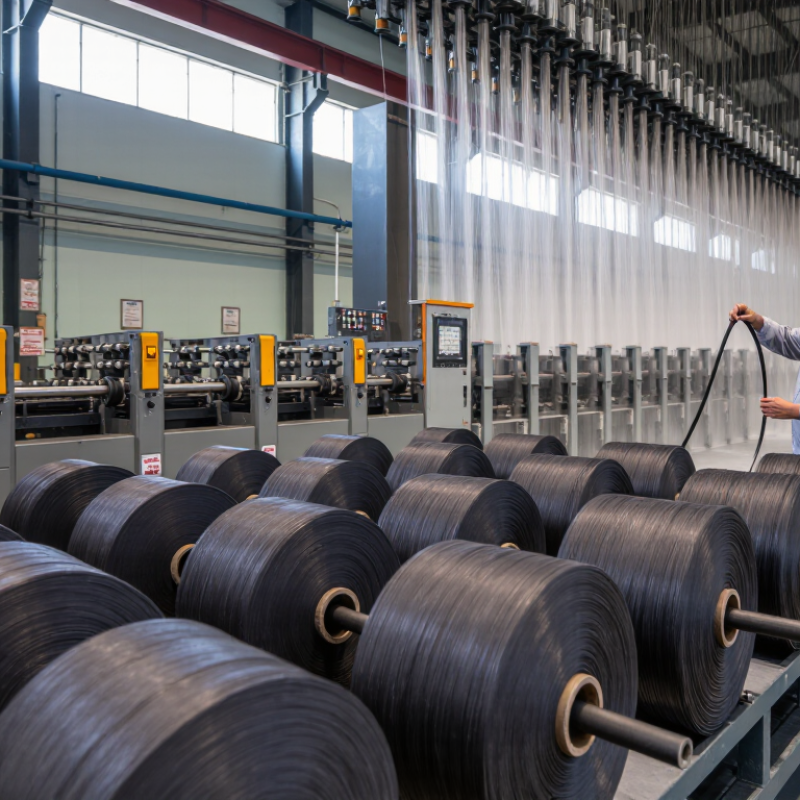
Basalt fiber 1200 Tex describes a linear mass of 1,200 grams per 1,000 meters. ISO 1144 defines Tex as grams per 1,000 meters. Thus, one kilometer weighs 1.2 kilograms before added sizing. This number describes fineness, not tensile strength. That distinction matters during supplier evaluation.
The yarn usually contains many continuous basalt filaments gathered into a compact bundle. A thin silane-based sizing coats the filaments and improves handling, abrasion resistance, and bonding with resin or cement. Under magnification, the bundle resembles a dark, slightly uneven rope rather than a solid wire.
Typical technical data report tensile strengths around 2,800–4,800 MPa, with density near 2.6–2.8 g/cm³. Actual values vary with melting, drawing, and testing methods.
MarketsandMarkets reported continued growth in fiber-reinforced concrete applications in its 2024 market review. Grand View Research also identified construction and transportation as important basalt-fiber application sectors in its 2024 analysis. These reports support rising demand, but market forecasts are not product guarantees. A 1200 Tex yarn may show excellent tensile performance while handling poorly in a specific weaving line. I have seen this overlooked. Moisture, twist, sizing compatibility, and package tension deserve direct testing. Short samples can mislead. A reliable specification should include Tex tolerance, filament count, sizing type, tensile results, elongation, and test standards.
Basalt fiber 1200 tex begins with carefully selected volcanic rock, not recycled glass or synthetic resin. The rock is crushed, cleaned, and melted at roughly 1,450–1,600°C. Stable temperature matters. Melt instability can create uneven filaments and weak sections. The molten basalt passes through platinum-alloy bushings, forming continuous filaments. A controlled sizing protects the filaments during winding and later processing. The strands are then gathered into a 1200 tex roving, meaning approximately 1,200 grams per 1,000 meters.
Testing starts with linear density checks from sampled packages. Technicians measure tensile strength, elongation, moisture, and sizing content under controlled laboratory conditions. Microscopic inspection can reveal broken filaments, fuzz, or poor bundling. Thermal exposure tests are also useful when the fiber will enter fire-resistant composites or high-temperature insulation. Test methods should follow recognized ISO or ASTM procedures, with conditioning temperatures and sampling rules clearly recorded.
A reliable supplier provides batch numbers, production dates, and traceable test reports. During factory evaluations, I would compare several packages, not one attractive sample. That matters. Basalt fiber can vary with raw material chemistry, bushing wear, and winding tension. A single strength result never tells the whole story. Some reports also omit moisture conditioning, which makes comparisons less dependable. Buyers should request retained samples and verify results independently before approving long-term supply. Even careful production has limits. That honest detail deserves attention.
Main Applications of Basalt Fiber 1200 Tex Worldwide
Basalt fiber 1200 Tex is widely used where strength, corrosion resistance, and stable performance matter. One thousand meters weighs about 1,200 grams, making it suitable for controlled industrial processing. Construction teams use it in concrete reinforcement, shotcrete, precast panels, and fiber-reinforced mortar. It helps reduce cracking around edges, joints, and thin sections. Performance still depends on mix design and curing conditions.
In infrastructure projects, manufacturers process 1200 Tex roving into grids, chopped fibers, pultruded profiles, and composite bars. These products support bridge repairs, drainage channels, railway components, and coastal structures. Basalt fiber does not rust like steel. It also offers useful thermal stability and electrical non-conductivity. However, resin compatibility and fiber dispersion require laboratory checks. Field results can vary more than expected.
Tips: Confirm the sizing system before buying. Match the fiber with cement, epoxy, or thermoplastic materials. Ask for tensile strength, moisture content, and ignition-loss data. Store rolls in dry, sealed conditions. Do not assume higher Tex always means better reinforcement. Processing equipment may need adjustment, especially when cutting or wetting the roving. A small trial batch often reveals problems earlier than a full production run.
| Supplier Region / Market | Typical 1200 Tex Product Form | Typical Technical Characteristics | Main Applications | Key Purchasing Requirements |
|---|---|---|---|---|
| East Asia Large-scale production and export market |
Continuous basalt filament roving, commonly supplied on industrial bobbins or spools; available in assembled or direct roving formats | Nominal linear density: 1,200 tex, equal to approximately 1.2 g/m; inorganic, non-combustible mineral fiber; sizing selected for polymer or cement matrices | Pultruded profiles, rebar, thermoplastic compounding, filament winding, woven reinforcement and chopped-fiber production | Tex tolerance, moisture level, package build, sizing compatibility, batch consistency and export documentation |
| Europe Technical-composite and infrastructure market |
Continuous roving with application-specific sizing for thermoset resins, thermoplastics, mineral matrices or textile conversion | High tensile-strength potential, good resistance to many chemicals, low moisture absorption compared with many natural fibers, and strong temperature resistance relative to common organic fibers | Automotive components, wind-energy parts, construction profiles, concrete reinforcement, fire-resistant panels and industrial textiles | REACH-related material information, technical data sheets, product traceability, fire-performance documentation and regulatory conformity |
| North America Composite manufacturing and infrastructure market |
Roving for pultrusion, winding, prepreg conversion, reinforced thermoplastics and hybrid reinforcement systems | Typical use depends on fiber diameter, filament count, sizing chemistry and matrix system; 1,200 tex is generally suited to automated reinforcement processes requiring stable payout | Utility poles, bridge components, structural profiles, sporting goods, transportation panels and corrosion-resistant reinforcement | ASTM or project-specific test data, dimensional consistency, tensile-property reporting, packaging suitability and dependable lead times |
| Central and Eastern Europe Infrastructure, concrete and industrial reinforcement market |
Roving supplied for conversion into mesh, grids, bars, tapes and cement-compatible reinforcement | Alkali-resistant sizing may be specified for cementitious applications; performance depends on concrete alkalinity, fiber dosage, impregnation and load-transfer design | Concrete strengthening, façade panels, bridge decks, repair laminates, masonry reinforcement and underground construction | Alkali-resistance evidence, pull-out or bond data, compatibility with cementitious systems, coating quality and construction approvals |
| Middle East Construction, energy and corrosion-resistant materials market |
Continuous roving for polymer-composite profiles, concrete reinforcement and protective laminate systems | Non-metallic reinforcement with resistance to rust; suitable for applications where low electrical conductivity and resistance to humid or saline environments are required | Desalination facilities, coastal construction, pipes, tanks, cable trays, façade systems and industrial flooring | Salt and humidity exposure data, UV protection for outdoor use, resin compatibility, storage conditions and project-based certification |
| South and Southeast Asia Textile conversion, construction and general composites market |
Roving for weaving, braiding, knitting, pultrusion, resin infusion and chopped-strand conversion | Good strength-to-weight potential, inorganic composition and compatibility with epoxy, polyester, vinyl ester and selected thermoplastic matrices when properly sized | Roofing sheets, water tanks, pipes, reinforcing mesh, electrical enclosures, boats and general-purpose composite parts | Competitive total cost, weaving performance, low fuzz generation, resin wet-out, carton protection and technical support during processing trials |
| Australia and Oceania Mining, marine, infrastructure and corrosion-control market |
Roving for pultruded grating, marine laminates, structural repair and non-metallic reinforcement products | Useful where corrosion resistance, reduced magnetic response and lower density than steel reinforcement are important; final properties depend on composite design | Mining infrastructure, marine structures, walkways, structural rehabilitation, utility components and corrosion-resistant panels | Marine durability data, fire and smoke requirements, engineering calculations, packaging for long-distance shipping and supply continuity |
| Latin America Construction, transportation and general composite market |
General-purpose 1,200 tex roving for resin-based laminates, profiles, mesh and molded composite products | Performance is normally evaluated through tensile strength, modulus, moisture content, sizing loss-on-ignition and composite laminate results | Pipes, storage tanks, construction panels, automotive parts, agricultural equipment and repair composites | Local technical assistance, import classification, consistent container loading, humidity protection and resin-processing guidance |
Evaluating a basalt fiber 1200 Tex supplier requires more than comparing prices. Begin with the technical data sheet and confirm the actual linear density tolerance. A reliable supplier should disclose filament diameter, sizing type, moisture content, tensile strength, and recommended storage conditions. Ask for recent batch reports, not only standard laboratory values. Request samples from different production dates. This reveals whether performance remains stable over time.
Small details matter. Check the spool winding, fiber fuzz, and package labels when the sample arrives. Uneven winding can create feeding problems during pultrusion or composite processing.
Traceability also deserves close attention. Each shipment should connect to a production date, raw material record, and quality inspection report. Suppliers with controlled testing equipment can explain their test methods clearly. They should provide independent laboratory verification when requested. A factory audit may reveal practical weaknesses, such as open storage areas or inconsistent humidity control.
Do not rely on polished documents alone. I have learned that a confident sales explanation cannot replace repeatable test results. Delivery capacity should be tested with a small order before committing to large volumes. Review lead times, packaging strength, technical response speed, and complaint handling.
A supplier may meet tensile targets yet fail to maintain consistent sizing performance. That gap can increase resin use and production waste. Ask difficult questions, record every answer, and leave room for doubt.
Leading Basalt Fiber 1200 Tex Suppliers in 2026 are judged by more than attractive quotations. A 1200 tex bundle weighs about 1,200 grams per kilometer, so consistency matters during winding, pultrusion, and textile processing. Experienced suppliers provide stable filament diameter, even sizing, and clean spool edges. These details reduce fuzz, breaks, and tension changes on the production floor.
Reliable suppliers share recent test data for tensile strength, moisture content, sizing compatibility, and linear density. Ask for samples from different production lots, not one carefully selected spool. Check the fiber at normal machine speed. Small differences can appear after several hours of operation. Traceable batch numbers, controlled packaging, and clear storage guidance also show mature quality management. Independent laboratory verification adds useful confidence when project risks are high.
Strong suppliers communicate practical limitations instead of promising perfect performance. Basalt fiber may respond differently to resins, heat, and abrasion than expected. That point is easy to overlook. Discuss the target application, resin system, delivery schedule, and required documentation before signing an order. Some suppliers offer technical support during trials, while others only arrange shipment. That difference can affect development time. My view is cautious: a low price means little if broken filaments, damp packaging, or inconsistent sizing cause repeated stoppages. Evaluation should remain evidence-based, and every claim deserves a production-scale check.
The chart summarizes commonly published technical ranges for continuous basalt fiber roving at approximately 1200 Tex. Values show range midpoints; hover over each bar to view the typical range. These benchmarks can support supplier comparison without ranking or naming individual companies.
It means 1,000 meters of fiber weigh about 1,200 grams. The figure describes linear density, not total reinforcement quality. Higher Tex is not automatically better.
It is used in concrete reinforcement, shotcrete, precast panels, and fiber-reinforced mortar. It can help limit cracks near joints, edges, and thin sections. Results depend on mix design and curing.
Processors convert it into grids, chopped fibers, profiles, and composite bars. These forms support bridge repairs, drainage channels, railway components, and coastal structures. Applications vary.
Basalt fiber does not rust like steel. It also provides useful thermal stability and electrical non-conductivity. However, it cannot solve every durability problem.
Ask for tensile strength, moisture content, sizing compatibility, and linear density data. Ignition-loss results may also help evaluate the surface treatment. Recent batch records matter more than old brochures.
Keep rolls sealed and dry until processing. Damp packaging can affect wetting and handling. Store rolls away from direct moisture and rough contact.
Request samples from several production lots, not one selected spool. Check filament diameter, sizing uniformity, spool edges, and batch traceability. Run the fiber at normal machine speed. Small differences may appear later.
Cutting or wetting may require equipment adjustments. Poor dispersion, resin mismatch, fuzz, and filament breaks can interrupt production. Laboratory checks are useful. Still, they are not enough alone.
No. Broken filaments, damp rolls, or unstable sizing can create costly stoppages. Compare documentation, support, samples, and delivery reliability. A cheaper quote may age badly.
Yes, a small trial can reveal handling and compatibility issues early. Test the intended cement, epoxy, or thermoplastic system. A trial may still miss long-run problems, so production-scale checking remains wise.
This guide presents Basalt Fiber 1200 Tex as a high-performance continuous filament material made from naturally sourced basalt rock. It explains its structure, filament arrangement, typical characteristics, and the balance of strength, thermal stability, corrosion resistance, and dimensional reliability that make it suitable for demanding applications. The article also outlines the main manufacturing stages, including melting, drawing, sizing, winding, and quality testing, with attention to consistency, tensile performance, tex accuracy, and surface condition.
It further examines worldwide applications in construction reinforcement, composite products, transportation components, marine structures, industrial equipment, and thermal or fire-resistant systems. To support informed purchasing decisions, the guide describes how to evaluate suppliers through production capacity, quality control, technical documentation, customization capabilities, delivery reliability, and customer support. Finally, it provides a practical overview of leading supplier categories and selection considerations for buyers seeking dependable Basalt Fiber 1200 Tex solutions in 2026.

Beihai Fiberglass