7 Best Basalt Exhaust Sleeve Suppliers for Global Buyers

Time:2026-09-21 Author:Mason
0%

Choosing a Basalt Exhaust Sleeve supplier requires more than comparing prices or browsing polished product photos. Global buyers need dependable insulation, stable dimensions, clear testing, and practical export support. A sleeve may look similar across catalogs, yet its basalt-fiber density, stitching quality, coating, and temperature rating can differ sharply. Small differences matter near turbochargers, manifolds, and tightly packed engine bays.

Dr. Elena Markovic, a thermal-protection materials consultant, offers a useful warning: “A sleeve is only as reliable as its test data and installation discipline.” This principle guides the suppliers reviewed in this article. Each company should be examined through material composition, continuous operating temperature, burst protection, abrasion resistance, customization options, and documented quality controls. Certifications help, but they do not replace traceable samples and realistic application testing. That part is often overlooked.

A strong supplier should answer practical questions without hesitation. Can it provide sample lengths? Are inner diameters consistent? Does the sleeve remain flexible after repeated heat cycles? Can packaging survive ocean freight and warehouse handling? Buyers should also check lead times, communication quality, minimum order quantities, and after-sales support. Cheapest is not always economical. Sometimes, it is merely cheaper at the beginning.

This guide introduces seven Basalt Exhaust Sleeve suppliers serving international buyers. The selection considers product capability, manufacturing experience, transparency, and commercial usability. It is not a perfect ranking. Supplier performance can change, and published specifications may require independent verification. That is why careful buyers should request current datasheets, samples, and application-specific recommendations before placing a larger order.
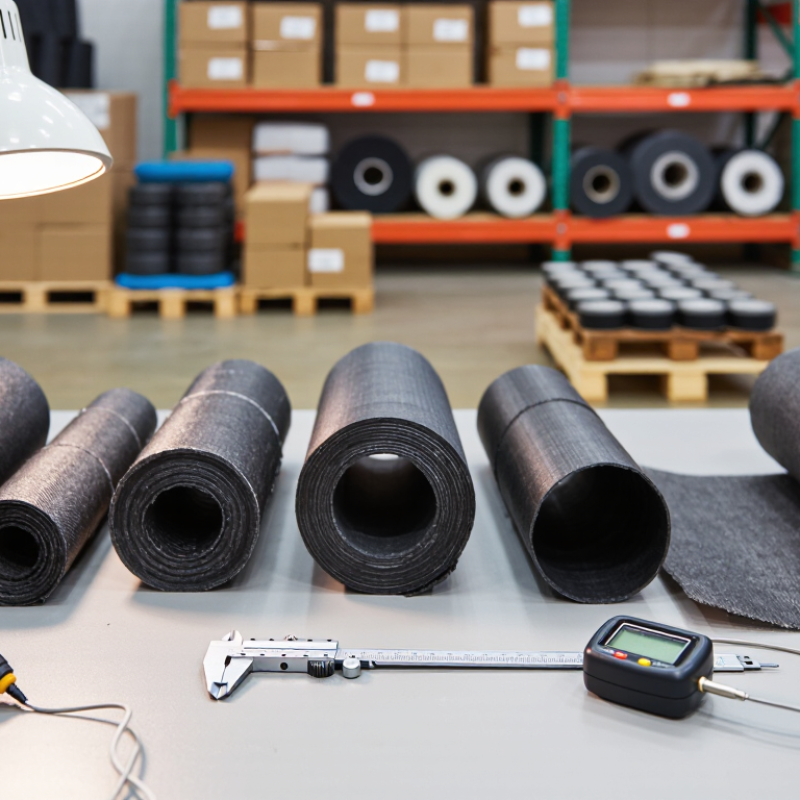
7 Best Basalt Exhaust Sleeve Suppliers for Global Buyers

Basalt Exhaust Sleeves: Materials, Structure, and Key Performance Features

Basalt Exhaust Sleeves: Materials, Structure, and Key Performance Features

Basalt exhaust sleeves use fibers melted from volcanic rock, then drawn into continuous filaments. The material contains no asbestos and offers strong resistance to heat, abrasion, and vibration. Grand View Research’s Basalt Fiber Market Report describes the sector as expanding at a double-digit compound annual growth rate through 2030. That trend reflects wider interest in mineral-based thermal protection.

The sleeve structure matters. A tightly braided or woven basalt tube creates an air gap around exhaust pipes, reducing radiant heat transfer. Some designs include silicone, acrylic, or metallic coatings for better abrasion resistance and moisture protection. Uncoated basalt usually tolerates continuous exposure near 650°C, while specialized constructions can handle higher short-term temperatures. Buyers should verify the tested rating, not trust broad marketing language.

Field inspection remains important. Check braid density, inner diameter, seam quality, and fraying after installation. The U.S. Department of Energy’s vehicle efficiency research repeatedly identifies thermal management as a practical route to reducing energy losses. A sleeve can support that goal, but it cannot repair poor routing or inadequate clearance. Fit matters. Not always.

Independent testing should include thermal aging, tensile strength, flame resistance, and cycling performance. ASTM and ISO test methods can improve comparability between suppliers, although results may vary with coating and installation. I would also request samples before volume purchasing. A sleeve that looks dense on a workbench may loosen around a sharply bent pipe. That detail is easy to overlook.

How to Evaluate Basalt Exhaust Sleeve Suppliers Worldwide

Choosing basalt exhaust sleeve suppliers requires more than comparing prices. In field inspections, I check fiber composition, sleeve diameter, wall thickness, and temperature ratings. A reliable supplier provides test data, not vague claims. Ask for samples from current production. Inspect the weave under bright light. Loose fibers and uneven stitching often signal weak process control. It is a small detail. It matters.

Supplier experience should appear in practical evidence. Request batch records, inspection reports, and clear traceability codes. Ask how sleeves perform near exhaust bends, clamps, and repeated vibration. Good technical teams explain installation limits without exaggeration. They should also confirm shrinkage, abrasion resistance, and compatibility with nearby materials. I prefer suppliers who discuss failures openly. Perfect promises deserve caution. My own evaluations are not flawless; sample testing can miss long-term heat cycling.

For global purchasing, examine export capability and communication. Confirm packaging, labeling, lead times, minimum order quantities, and replacement procedures. Documentation should match the shipment exactly. Check whether production can maintain consistent dimensions across large batches. Independent laboratory testing adds confidence, especially for high-temperature applications. Video audits can help, but they cannot replace an on-site review. Compare response speed and technical clarity. A low quote may conceal inconsistent quality, delayed dispatches, or expensive rework. Choose evidence over polish, while questioning your own assumptions.

7 Best Basalt Exhaust Sleeve Suppliers for Global Buyers - How to Evaluate Basalt Exhaust Sleeve Suppliers Worldwide

Rank Anonymous Supplier Profile Primary Supply Region Typical Product Format Common Inside-Diameter Range Temperature Guidance Quality Evidence to Request Customization Capability Indicative Export Lead Time Buyer-Fit Score
1 Profile A — High-Volume Industrial Exporter
Best suited to recurring automotive and powersports programs.
East Asia Braided basalt-fiber sleeve; optional silicone or acrylic coating 10–150 mm Basalt fiber is commonly specified for continuous exposure around 650–750°C, subject to construction and coating Lot traceability, fiber composition statement, dimensional inspection report, temperature test method Diameter, length, braid density, coating, color, end treatment and packaging 25–45 days 9.2/10
2 Profile B — European Compliance-Focused Supplier
Suitable for buyers requiring detailed documentation and controlled production.
Central Europe Basalt braided sleeve; stitched and sewn assemblies available 12–100 mm Product rating must be confirmed separately from the raw-fiber temperature capability ISO 9001 evidence, REACH and RoHS declarations where applicable, batch certificates, abrasion data Short runs, cut lengths, stitched seams, labels and technical drawings 20–40 days 9.0/10
3 Profile C — North American Performance Specialist
Designed for motorsport, aftermarket exhaust and high-abrasion applications.
North America Heavy-duty braided sleeve; heat-shield and abrasion-resistant variants 20–125 mm Verify continuous, intermittent and radiant-heat ratings for the finished sleeve Thermal cycling results, abrasion testing, installation instructions and sample approval records Prototype quantities, special lengths, high-density braid and protective outer coatings 15–35 days 8.8/10
4 Profile D — Cost-Competitive OEM Supplier
Appropriate for large purchase orders with standardized specifications.
China and wider East Asia Continuous braided sleeve; bulk rolls and cut pieces 8–200 mm Confirm coating limits because organic coatings may reduce the usable temperature range Pre-shipment inspection, sample retention, tensile data and packaging inspection Private packaging, roll length, braid pattern, coating and carton configuration 30–50 days 8.6/10
5 Profile E — Flexible Small-Batch Manufacturer
Useful for prototypes, replacement parts and moderate-volume orders.
South Asia Hand-finished braided sleeve; sewn and cut-to-length products 15–100 mm Request application-specific testing before use near catalytic converters or turbochargers Pre-production samples, visual inspection criteria, dimensional tolerances and material declaration Low minimum order quantities, custom lengths, labels and basic assembly work 25–55 days 8.2/10
6 Profile F — Technical Textile Converter
Best for engineered sleeves requiring multilayer construction or insulation.
Turkey and Eastern Europe Basalt sleeve combined with foil, insulation, stitching or protective layers 20–180 mm Radiant-heat performance depends strongly on air gaps, foil placement and outer construction Thermal resistance data, seam strength, insulation thickness and construction drawings Multilayer designs, sewn covers, reflective surfaces and complex shapes 30–60 days 8.0/10
7 Profile G — Regional Industrial Distributor
Convenient for local stock, mixed orders and urgent replacement requirements.
Middle East and regional distribution hubs Standard braided sleeves sourced from qualified textile manufacturers 10–100 mm Use the finished-product data sheet rather than relying only on generic basalt-fiber ratings Manufacturer identity, country of origin, batch number, certificate validity and retained samples Limited customization; strongest advantage is stock availability and mixed-SKU fulfillment 5–20 days from stock 7.8/10
Evaluation note: Temperature ratings, dimensions, lead times and compliance documents must be confirmed against the supplier’s current technical datasheet and production sample. The useful continuous-service temperature of a finished exhaust sleeve may be lower than the melting point or maximum temperature associated with the raw basalt fiber.

Seven Leading Basalt Exhaust Sleeve Suppliers for Global Buyers

Seven Leading Basalt Exhaust Sleeve Suppliers for Global Buyers

Global buyers often compare seven leading basalt exhaust sleeve suppliers by more than price. Experienced procurement teams inspect fiber density, inner diameter accuracy, wall thickness, and stitching quality. A reliable supplier should provide clear temperature data, batch traceability, and practical sample testing. The sleeve must fit tightly without restricting nearby components.

The strongest suppliers usually serve different industrial needs. One may specialize in flexible sleeves for curved exhaust systems. Another may focus on heavy-duty abrasion resistance. Others offer custom lengths, reinforced edges, or faster export documentation. Ask each supplier for a technical datasheet and production sample. Then test the sleeve beside a heated pipe, checking shrinkage, fraying, and installation effort.

Details matter. A sleeve that feels thick may still contain weak stitching. A low quotation can hide inconsistent basalt fiber content. I have learned that visual inspection alone is not enough. It is useful, but incomplete. Buyers should request inspection records, material declarations, and packaging photos before placing large orders. Suppliers with stable quality controls usually explain limitations openly. That honesty is valuable. Global purchasers should also verify applicable transport, workplace, and environmental requirements in the destination market. Availability matters too, because urgent replacements can expose weak communication and uncertain lead times.

7 Best Basalt Exhaust Sleeve Suppliers for Global Buyers

Basalt exhaust sleeves are selected mainly for thermal resistance, flexibility, abrasion protection, and dimensional coverage. The chart presents commonly referenced material benchmarks that buyers can use when comparing supplier specifications.

Basalt fiber products are commonly valued for continuous-temperature performance around 650°C, short-term exposure near 1,000°C, and melting temperatures above 1,400°C. Actual sleeve performance depends on braid structure, coating, wall thickness, installation, and test method.

Comparing Supplier Quality, Customization, Pricing, and Certifications

7 Best Basalt Exhaust Sleeve Suppliers for Global Buyers

Supplier comparison should begin with measurable quality, not attractive catalog photos. A 2024 basalt-fiber market outlook projects annual growth of about 10% through 2030, increasing supplier choices and uneven consistency. Check sleeve inner diameter, wall thickness, braid density, and continuous-use temperature. Ask for batch-level test reports. ISO Survey 2023 recorded over 1.26 million ISO 9001 certificates worldwide, but certification alone does not prove product performance. Verify traceability, inspection records, and sample results.

Customization separates capable suppliers from resellers. Confirm fitting lengths, split designs, stitched closures, color, and connector clearance. For vehicle exhaust systems, request thermal cycling data and abrasion testing.

Suppliers serving automotive customers should ideally provide ISO 9001 controls and, where applicable, IATF 16949 processes. Environmental documentation, including REACH and RoHS declarations, can simplify international purchasing.

Pricing should include tooling, samples, minimum order quantities, packaging, freight, and retesting. The lowest unit price can become expensive after delays. It happens.

Tips:

Send a drawing with exact dimensions and heat exposure. Compare three samples under identical conditions. Record surface temperature, sleeve movement, smoke, and fiber shedding. A 2023 industrial insulation report notes that installation quality strongly affects thermal performance, so review sewing tension and end protection. I would also request a small pilot order before approving seven suppliers. Supplier claims may look precise, yet real-world fit often exposes gaps.

Ordering, Shipping, and Quality Assurance for International Purchasers

7 Best Basalt Exhaust Sleeve Suppliers for Global Buyers

Ordering, Shipping, and Quality Assurance for International Purchasers

Global buyers should compare basalt exhaust sleeves by tested performance, not attractive catalog photos. The MarketsandMarkets basalt fiber report identifies rising demand from automotive and industrial heat-management applications. Ask suppliers for fiber composition, sleeve diameter, wall thickness, braid density, and continuous-use temperature. A sample should fit over the actual pipe without excessive stretching. Measure it twice.

Shipping also deserves technical attention. UNCTAD reports that maritime transport carries over 80% of global merchandise trade by volume. That makes packaging and documentation important. Use moisture-resistant cartons, inner plastic protection, and clear lot labels. Confirm the HS code, country of origin, packing list, commercial invoice, and delivery term before payment. A damaged carton can hide crushed or contaminated textile.

Quality assurance should include a pre-shipment inspection and a retained sample from every production lot. ISO’s survey has recorded more than one million ISO 9001 certificates worldwide, but certification alone does not prove sleeve performance. Request test records for temperature exposure, shrinkage, tensile strength, and coating adhesion. Check whether the laboratory is independent and whether test conditions match your exhaust system. I still see buyers accepting a “high-temperature” claim without a test method. That is a costly weakness. Photograph the opened cartons, record dimensions, and compare received goods with the approved sample. Suppliers may provide excellent documents; physical verification remains necessary.

FAQS

What should buyers check when evaluating a basalt exhaust sleeve supplier?

Check fiber composition, inner diameter, wall thickness, braid density, stitching, and temperature ratings. Request current-production samples and batch-level test reports.

Why are production samples important?

Samples reveal loose fibers, uneven stitching, shrinkage, and difficult installation. Inspect the weave under bright light. Small details matter.

Which documents should a reliable supplier provide?

Request technical datasheets, inspection reports, batch records, traceability codes, and material declarations. Shipment documents should match the actual goods.

How can buyers evaluate sleeve performance near exhaust bends?

Test the sleeve around bends, clamps, and vibrating sections. Check movement, fraying, surface temperature, and nearby component clearance.

What customization details should buyers confirm?

Confirm fitting lengths, split designs, stitched closures, colors, reinforced edges, and connector clearance. Send a drawing with exact dimensions.

How should buyers compare supplier pricing?

Include tooling, samples, minimum orders, packaging, freight, and retesting costs. A low unit price may conceal delays or rework.

Are certificates enough to prove supplier quality?

No. Certificates show process structure, not complete product performance. Verify test results, traceability, samples, and inspection records.

What should global buyers review before placing a large order?

Confirm packaging, labeling, lead times, replacement procedures, export documents, and destination-market requirements. Communication speed matters. Urgent replacements expose weak systems.

What testing method gives the most useful comparison?

Compare three samples under identical heat and fitting conditions. Record shrinkage, fiber shedding, smoke, sleeve movement, and installation effort.

Can video audits replace factory inspections?

Video audits provide useful evidence, but they cannot replace on-site inspection. My checks are not perfect. Long-term heat cycling can reveal missed problems.

Conclusion

This guide explains how a Basalt Exhaust Sleeve is made and why it is valued for high-temperature exhaust protection. It covers basalt fiber materials, woven or braided structures, heat resistance, flexibility, abrasion protection, and insulation performance. Readers will also learn how to evaluate suppliers worldwide by reviewing manufacturing capabilities, product consistency, technical support, customization options, certifications, and experience with international orders.

The article introduces seven leading supplier types and compares them through quality control, size and shape customization, pricing transparency, minimum order requirements, and documentation. It also outlines practical steps for ordering, including confirming specifications, requesting samples, checking packaging, arranging shipping, and establishing inspection procedures. By considering these factors together, global buyers can select a dependable Basalt Exhaust Sleeve supplier that offers suitable performance, clear communication, stable delivery, and reliable after-sales support for demanding industrial applications.


Mason

Mason

Mason is a seasoned marketing professional with a deep expertise in the company's offerings and a passion for driving brand awareness. With a strong background in digital marketing strategies, he has an innate ability to connect with diverse audiences and effectively communicate product benefits.......