What Is Basalt Fibre Strength and How Strong Is It?

Time:2026-10-16 Author:Henry
0%

Basalt Fibre Strength is often discussed as if one number could explain everything. It cannot. Strength depends on fibre diameter, mineral composition, surface treatment, manufacturing temperature, and testing direction. A clean filament may look delicate, yet it can resist remarkable tensile loads. In a laboratory, a single strand may support a small metal weight before breaking. Real composites behave differently.

Professor Viktor V. Shapovalov, a widely cited basalt-fibre researcher, described basalt fibre as “a material of the future.” That statement sounds optimistic. It also needs careful examination. Basalt fibre offers high tensile strength, useful stiffness, strong heat resistance, and good resistance to many chemicals. However, performance changes when fibres are woven, bonded with resin, or exposed to moisture and repeated loading. A datasheet value is not always a field result.

This article examines what Basalt Fibre Strength means in practical engineering. It separates tensile strength from elastic modulus, impact resistance, and long-term durability. These properties are related, but they are not interchangeable. Engineers must compare test standards, fibre grades, and composite designs. Small differences matter.

There is no perfect fibre. Basalt can be strong, but careless processing can create weak points. Dust, uneven coating, sharp bending, or poor resin wetting may reduce the final result. That is easy to overlook.

The following discussion uses measurable evidence, practical examples, and reasonable caution. It also recognizes an uncomfortable truth: laboratory strength does not guarantee identical performance inside a bridge panel, pipe, or reinforced concrete structure. Real reliability requires testing under real conditions.
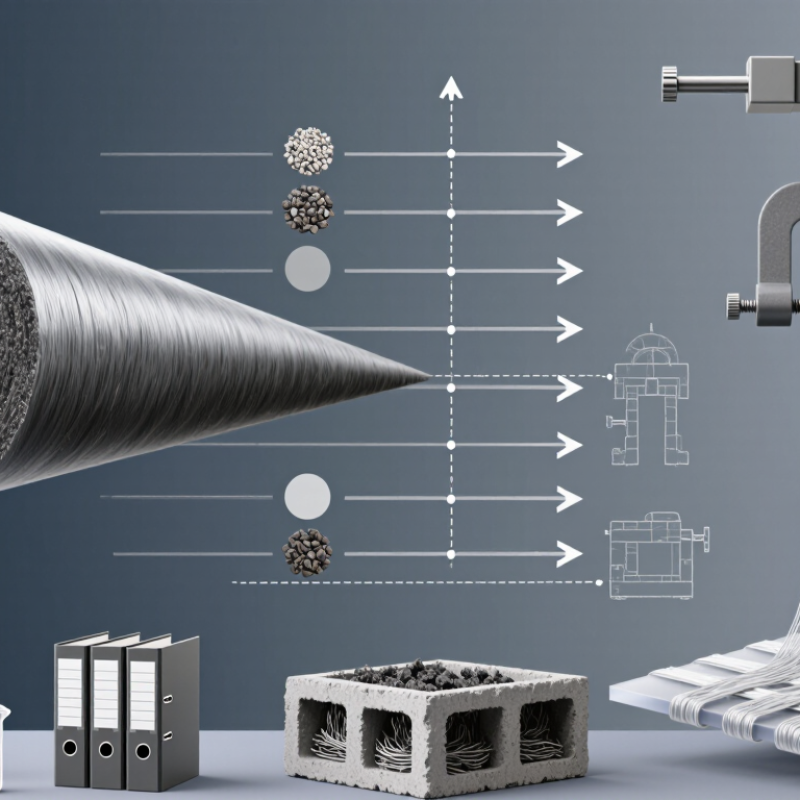
What Is Basalt Fibre Strength and How Strong Is It?

What Basalt Fibre Strength Measures: Tensile, Flexural, and Shear Performance

Basalt fibre strength is not a single number. It depends on what is tested, how fibers are aligned, and how the material is processed. In laboratory work, tensile strength measures resistance to being pulled apart. A straight, continuous filament can carry high loads along its axis. Short, randomly distributed fibers behave differently. This distinction is easy to overlook.

Flexural performance describes how a reinforced panel or bar resists bending. During a beam test, one face is compressed while the opposite face is stretched. Basalt fibers can help control cracks on the tension side after the matrix begins to fail. Flexural strength is therefore a property of the complete composite, not the fiber alone. Fiber length, volume fraction, bonding, and curing quality all matter. A poorly wetted surface can reduce the expected benefit.

Shear strength measures resistance to sliding forces between layers or across a section. It matters in beams, connections, pipes, and panels where forces change direction. Basalt reinforcement may improve crack bridging, but weak interfaces can still govern failure. Reliable testing should record fiber orientation, specimen dimensions, loading rate, temperature, and moisture exposure. Comparing values from different methods can create false precision. A careful engineer checks the test setup before trusting a headline value. Field performance may still vary, and that deserves honest review.

What Basalt Fibre Strength Measures

Basalt fibre strength depends on the type of loading and the test specimen. Continuous basalt fibre typically shows a tensile strength of about 2,800–4,800 MPa. For basalt-fibre-reinforced polymer laminates, commonly reported flexural strength is approximately 300–900 MPa, while interlaminar shear strength is often around 30–80 MPa.

The chart uses a logarithmic scale because tensile, flexural, and shear strengths differ considerably. Flexural and shear values describe composite laminates, since these properties depend on the fibre layout, resin, fibre volume, and manufacturing process.

Typical Basalt Fibre Tensile Strength: 2,800–4,800 MPa

What Is Basalt Fibre Strength and How Strong Is It?

Typical basalt fibre tensile strength ranges from 2,800 to 4,800 MPa. That is remarkably high for a mineral-based fibre. For comparison, a single filament can carry heavy tension despite its tiny diameter. In practical engineering, strength depends on filament quality, fibre alignment, sizing, and test conditions. Tensile strength is not the same as composite strength. Resin quality and bonding also matter.

Laboratory results can vary. Test speed, gauge length, humidity, and specimen preparation may change the reported value. A dry fibre tested along its length performs differently from a woven fabric inside concrete or polymer. Engineers should check certified test data and relevant standards before selecting reinforcement. The upper value, 4,800 MPa, should not be treated as a guaranteed design figure. That would be careless.

Tips: Compare fibre data using the same test method. Check elongation, elastic modulus, moisture exposure, and temperature resistance, not strength alone. Store fibre in a dry, protected area before processing. Small handling damage can reduce performance. Field results may disappoint. Repeated trials and conservative safety factors create a more reliable design.

Elastic Modulus and Strain: 85–95 GPa and About 3% Elongation

Basalt fibre strength is often reported between 2,800 and 4,800 MPa in technical reviews. However, strength alone does not explain its performance. The elastic modulus normally sits near 85–95 GPa, according to comparative data published in Materials and composite engineering literature. This stiffness means basalt fibre can resist deformation under load. It is stiffer than many polymer fibres, but less stiff than carbon fibre.

Its elongation is usually about 3% before failure. That figure matters. A fibre with 90 GPa modulus and 3% strain can absorb useful tensile energy, while still limiting excessive movement in a reinforced panel. Laboratory testing under ISO 527 or ASTM D3822 conditions can produce different results. Fibre diameter, surface treatment, moisture, gauge length, and test speed all influence the measurement. Published industry reviews also warn that fibre properties do not transfer directly into finished composites. Resin quality and fibre alignment matter greatly.

The number looks impressive.

In practice, a woven basalt laminate may perform below the fibre’s advertised strength because of voids, uneven loading, or weak bonding. I would treat 85–95 GPa and approximately 3% elongation as design guidance, not certainty. Testing the actual batch remains essential, especially where repeated loading or temperature changes are expected. That is the less convenient truth.

Basalt Fibre Versus E-Glass and Steel: Strength-to-Weight at 2.65 g/cm³

Basalt fibre combines a density of about 2.65 g/cm³ with tensile strength commonly reported between 2.5 and 3.5 GPa. These figures appear in technical reviews from JEC Group and testing guidance aligned with ISO 10618. At 3.0 GPa, basalt fibre provides roughly 1.13 GPa per g/cm³. That is a useful strength-to-weight result.

E-glass usually weighs about 2.55 g/cm³ and reaches approximately 2.0–3.5 GPa in published fibre data. Its specific strength can therefore overlap basalt fibre. The difference is often smaller than marketing claims suggest. Steel is much denser, near 7.85 g/cm³, while common structural grades deliver roughly 0.4–0.6 GPa tensile strength. Its strength-to-weight ratio is far lower, although steel remains highly reliable under compression, impact, and fire exposure.

The comparison needs care. Fibre strength is measured on individual filaments, not finished bars or panels. Resin quality, fibre alignment, voids, moisture, and loading direction can reduce composite performance. ACI 440.1R and ASTM D3039-based testing show why design values must come from the complete composite. Real projects also expose a weakness in simple spreadsheets: basalt may save weight, but connection details and brittle failure behavior still require engineering judgment. The numbers are persuasive, but not complete.

What Is Basalt Fibre Strength and How Strong Is It? - Basalt Fibre Versus E-Glass and Steel: Strength-to-Weight at 2.65 g/cm³

Material Typical Tensile Strength
(MPa)
Density
(g/cm³)
Elastic Modulus
(GPa)
Specific Strength
(MPa·cm³/g)
Strength at Equal Mass
Relative to Basalt
Typical Form and Notes
Continuous Basalt Fibre 2,800–4,800 2.63–2.80 85–95 1,000–1,820 100% Mineral-based continuous filaments; properties vary with filament diameter, sizing, processing, and test conditions.
E-Glass Fibre 2,000–3,500 2.54–2.60 70–76 770–1,380 Approximately 77–76% Common reinforcement fibre with high tensile strength and lower modulus than basalt in many typical grades.
High-Strength Steel Wire 1,000–2,000 7.85 190–210 127–255 Approximately 13–14% Steel provides high stiffness and toughness, but its much higher density reduces tensile strength-to-weight efficiency.
Calculation basis: Specific strength = tensile strength ÷ density. The values are expressed as MPa·cm³/g, which is numerically equivalent to kN·m/kg. The comparison uses representative midpoint values of 3,500 MPa for basalt fibre, 2,500 MPa for E-glass fibre, and 1,000 MPa for high-strength steel wire. The 2.65 g/cm³ reference is close to the density of mineral reinforcement fibres and is useful for mass-normalized comparison; it does not change the actual density of steel.
Important: These are typical ranges for dry reinforcement materials, not guaranteed design values. Composite laminate strength also depends on fibre volume fraction, fibre alignment, resin properties, bonding quality, defects, moisture, temperature, and loading direction.

What Controls Practical Strength: Matrix, Fibre Content, Orientation, and Testing

What Is Basalt Fibre Strength and How Strong Is?

What Controls Practical Strength: Matrix, Fibre Content, Orientation, and Testing

Basalt fibre can show tensile strength around 2.5 to 4.8 GPa in controlled laboratory tests. That number describes the fibre, not the finished composite. Practical strength often falls because stress must transfer through the matrix. A weak bond leaves small gaps around the fibres. Those gaps can start cracks.

The matrix holds fibres in position and spreads applied loads. Epoxy, cementitious systems, and other binders behave differently under tension, impact, and moisture. Fibre content also matters. Too little fibre limits reinforcement, while excessive content may cause poor wetting and voids. The result feels rough, uneven, and weaker than expected. More fibre is not always better.

Orientation changes the answer dramatically. Aligned fibres resist loads along their length, while chopped or randomly oriented fibres provide broader, less concentrated reinforcement. Real components usually contain bends, overlaps, and imperfect alignment. Testing must reflect those details. Specimen shape, gauge length, loading speed, temperature, and moisture can change measured strength. A smooth laboratory coupon may outperform a drilled, weathered panel.

Engineers should inspect fracture surfaces and record manufacturing conditions, not only headline values. I have found that small voids can explain large strength losses. That observation is easy to overlook. Testing remains useful, but one result should not define every application. Practical design needs safety margins, repeated tests, and honest attention to manufacturing variation.

FAQS

What is the typical tensile strength of basalt fibre?

Typical tensile strength ranges from 2,800 to 4,800 MPa. A single thin filament can carry substantial tension. The upper figure is not a guaranteed design value. It depends.

Is basalt fibre stronger than E-glass fibre?

Basalt fibre often reaches about 2.5–3.5 GPa. E-glass fibre commonly reaches about 2.0–3.5 GPa. Their strength ranges can overlap significantly. Marketing comparisons may look too simple.

Why does basalt fibre offer useful strength-to-weight performance?

Its density is about 2.65 g/cm³. At roughly 3.0 GPa, its specific strength is about 1.13 GPa per g/cm³. Steel is much denser, near 7.85 g/cm³. Weight savings can be meaningful.

Does fibre tensile strength equal composite strength?

No. Composite strength is usually lower than individual filament strength. The matrix must transfer stress between fibres. Resin quality, bonding, voids, and alignment can reduce performance.

How does fibre orientation affect practical strength?

Aligned fibres resist loads best along their length. Random or chopped fibres spread reinforcement in several directions. They usually provide less concentrated tensile strength. Bends and overlaps can create weaker areas.

Can adding more basalt fibre always improve strength?

Not necessarily. Too little fibre provides limited reinforcement. Too much fibre can cause poor wetting and trapped voids. The surface may look rough or uneven. More material is not always better.

Which testing conditions can change reported strength?

Test speed, gauge length, humidity, temperature, and specimen preparation matter. A dry filament behaves differently from a weathered composite panel. Drilled holes and damaged edges may reduce measured strength. One smooth laboratory coupon cannot represent every product.

How should basalt fibre be handled before processing?

Store it in a dry, protected area. Keep dust, moisture, and mechanical damage away from the fibre. Small scratches or crushed strands can reduce performance. This detail is easy to miss.

What information should engineers review before selecting basalt fibre?

Review tensile strength, elongation, modulus, moisture resistance, and temperature resistance. Check data from complete composite samples, not fibres alone. Compare results from the same test method. Conservative safety factors remain sensible.

Why are repeated tests important for basalt fibre applications?

Manufacturing variation can change the final result. Small voids may cause large strength losses. Repeated trials reveal whether performance is consistent. The first result may be misleading.

Conclusion

Basalt Fibre Strength describes how effectively basalt fibres resist tension, bending, and shear under applied loads. Their tensile strength commonly falls between 2,800 and 4,800 MPa, while an elastic modulus of approximately 85–95 GPa provides a useful balance of stiffness and flexibility. With about 3% elongation before failure, basalt fibre can absorb strain while maintaining strong load-bearing performance. Its density of around 2.65 g/cm³ also gives it an attractive strength-to-weight ratio when compared with E-glass and steel.

However, fibre strength alone does not determine the performance of a finished composite. The surrounding matrix must transfer loads efficiently, and factors such as fibre content, alignment, bonding quality, manufacturing consistency, and test conditions can significantly affect results. Continuous, well-oriented fibres generally deliver higher directional strength, while random or poorly bonded fibres may produce lower practical values. Therefore, Basalt Fibre Strength should be evaluated through tensile, flexural, and shear testing in the context of the complete material system.


Henry

Henry

Henry is a dedicated marketing professional with a profound expertise in the company's offerings. With years of experience in the industry, he possesses an impressive understanding of the market dynamics and consumer behaviors that drive success. Henry is committed to sharing his insights through......