Choosing the best Steel Inside Concrete in China is not a brand contest. It is a decision about matching reinforcing steel to the project, design, and exposure conditions. A high-rise in a seismic zone, a coastal bridge, and a small indoor slab do not face the same demands. The right rebar must meet the specified strength and ductility, fit the structural drawings, and comply with the applicable Chinese standards. Grade names alone are not enough. Check the project specification.
For buyers, practical evidence matters. Review the mill certificate, heat number, test results, bar diameter, and rib pattern. Confirm that tensile and bend tests match the required specification, and that delivered bundles can be traced to their production records. In seismic applications, engineers may require rebar with defined ductility characteristics, such as an appropriate seismic-grade designation. Coastal or chemically aggressive environments may also call for added protection through the overall concrete and reinforcement design. Storage matters, too. Keep bars off wet soil and inspect them for heavy rust, oil, or damage before placement.
There is no universal winner. That answer is less tidy, but more useful. A lower-cost bar can become an expensive mistake if its properties or documentation do not match the design. Compare qualified suppliers on verified performance, consistency, delivery reliability, and technical support—not just price. Ask an independent testing laboratory to verify material when project risk or documentation gaps justify it. The final selection should be confirmed by the project’s licensed structural engineer and procurement requirements. Good reinforcement is often invisible after pouring. Its quality still matters.
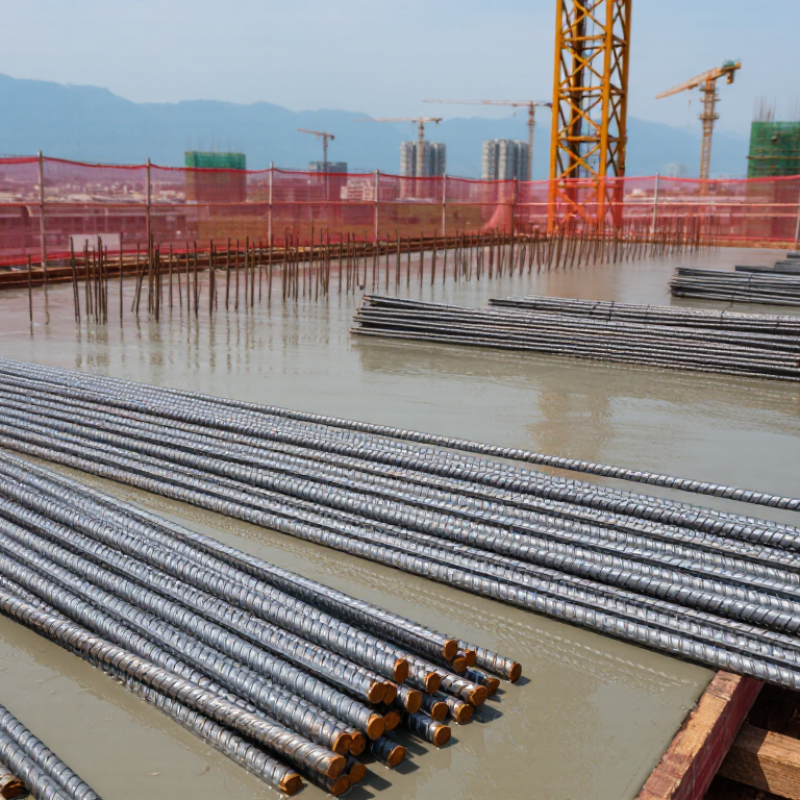
Define Reinforcing Steel in Concrete and Its Role in Chinese Construction
Reinforcing steel, often called rebar, is embedded in concrete to carry tension that concrete handles poorly. Concrete resists compression well; steel helps control cracking and supports bending loads in beams, slabs, and columns. The raised ribs on a bar improve its bond with surrounding concrete. A cut section may look simple, but bar spacing, cover, bends, and lap lengths all affect performance.
China’s GB/T 1499.2-2018 standard covers hot-rolled ribbed reinforcing bars, including HRB400 and HRB500 grades. HRB400 indicates a nominal yield-strength class of about 400 MPa; the suitable grade still depends on structural design and project conditions. The World Steel Association reported China produced about 1,005 million tonnes of crude steel in 2024. That figure shows the scale of the country’s steel industry, not the amount made specifically for concrete reinforcement.
In practice, “best” does not mean simply choosing the highest strength. Engineers also consider seismic demands, corrosion exposure, weldability, and whether workers can place bars without crowding them. A congested beam cage can obstruct concrete flow. Even a compliant bar cannot fix poor placement or inadequate cover. Inspection helps, but it is not a substitute for careful site work. One trade-off is easy to miss: stronger steel may allow smaller bars, yet detailing and construction tolerances still matter.
Compare HRB400 and HRB500 Rebar: 400 MPa vs. 500 MPa Minimum Yield Strength
What Is the Best Steel Inside Concrete in China?
HRB400 and HRB500 rebar differ mainly in minimum yield strength: 400 MPa versus 500 MPa. HRB500 can carry higher design loads with less steel area. That advantage may reduce congestion inside beams, columns, and slabs. However, stronger steel is not automatically the better choice. Engineers must check ductility, seismic detailing, anchorage length, and concrete strength before selecting it. A crowded beam may still need careful bar spacing.
In practical site inspections, rebar condition matters as much as its grade. Check mill certificates, batch numbers, rib markings, diameter, bends, and visible rust. Sampling and laboratory tests should confirm yield strength and elongation. HRB400 is often easier to specify for ordinary reinforced concrete. HRB500 may suit heavily loaded columns or projects where reducing reinforcement congestion is important. The wrong grade can create detailing problems. This point deserves more attention.
Tips: Match the rebar grade with structural calculations and local Chinese codes. Confirm whether the design permits HRB500 in seismic members. Keep adequate concrete cover and spacing for proper compaction. Do not replace HRB400 with HRB500 without written engineering approval. Higher strength does not fix poor bar placement. Concrete still needs to flow around every rib.
What Is the Best Steel Inside Concrete in China? Compare HRB400 and HRB500 Rebar
| Comparison Dimension |
HRB400 Rebar |
HRB500 Rebar |
| Minimum yield strength |
400 MPa |
500 MPa |
| Minimum tensile strength |
540 MPa |
630 MPa |
| Product type |
Hot-rolled ribbed reinforcing steel bar for concrete |
Hot-rolled ribbed reinforcing steel bar for concrete |
| Relative strength level |
Lower specified yield-strength grade of the two |
Higher specified yield-strength grade of the two |
| Potential design benefit |
May suit designs where the specified strength and reinforcement quantity meet structural requirements. |
May allow a more efficient reinforcement design when permitted by the structural calculations and applicable design rules. |
| Design considerations |
Check bar size, spacing, anchorage, lap splices, ductility requirements, and detailing against the project design. |
Higher strength does not automatically mean 20% less steel; crack control, anchorage, ductility, spacing, and code limits still apply. |
| Typical selection factors |
Structural design requirements, availability, fabrication needs, and project specifications |
Structural design requirements, availability, fabrication needs, and project specifications |
| Seismic applications |
Use the grade and any required seismic designation specified by the structural design. |
Use the grade and any required seismic designation specified by the structural design. |
| Applicable product standard |
China’s hot-rolled ribbed steel bar product requirements are covered by GB/T 1499.2. Confirm the edition and project-specific requirements when procuring or designing. |
| Which is the better choice? |
Neither grade is universally best. The appropriate choice depends on the structural calculations, applicable codes, construction details, and project specifications. |
Note: Minimum strength values are product-grade requirements, not substitutes for design values. Final reinforcement selection and detailing should be determined by a qualified structural engineer in accordance with the applicable project codes.
Check Seismic Rebar Grades Against GB/T 1499.2 Requirements
What Is the Best Steel Inside Concrete in China?
For seismic concrete structures in China, the best rebar is not simply the strongest grade. It must satisfy the seismic requirements of GB/T 1499.2. Engineers commonly compare HRB400E, HRB500E, and other approved “E” grades for strength, ductility, and project conditions. The “E” designation matters. It indicates enhanced performance under repeated loading.
According to GB/T 1499.2, seismic rebar should demonstrate reliable yield-to-tensile strength. The tensile-to-yield strength ratio should generally reach at least 1.25. Its total elongation at maximum force should be at least 9%. The actual yield strength should also remain within the standard’s permitted range above the nominal value. These limits help prevent sudden brittle failure during earthquakes. Stronger is not always safer.
Quality control must continue after delivery. Check the grade mark, diameter, heat number, and mill certificate. Independent testing should verify yield strength, tensile strength, elongation, and bend performance. Inspectors should also watch for rust, surface cracks, and inconsistent ribs. A certificate alone is not proof.
Welding deserves careful attention. Chemical composition and connection methods can affect performance. Site teams should follow the approved design and testing procedure. In practice, material selection can become rushed when construction schedules tighten. That is a weakness worth recognizing. A technically suitable bar may still fail project expectations if traceability and installation control are poor.
Match Rebar Grade to Structural Loads, Exposure, and Project Standards
What Is the Best Steel Inside Concrete in China?
The best rebar depends on structural loads, exposure, and project standards. There is no universal “best” grade for every building. A warehouse column carrying heavy loads may need HRB500E, while a smaller residential beam may use HRB400E. The structural engineer should confirm the grade through design calculations, not price comparisons. Short spans still need careful checking.
Exposure changes the decision. Coastal foundations face chloride penetration, while northern structures may experience freeze-thaw cycles and deicing salts. Higher-strength steel cannot replace adequate concrete cover, proper compaction, or crack control.
On site, water trapped around bars can create future corrosion. That detail is easy to miss.
Check the applicable Chinese standards, including GB/T 1499.2 and the project’s seismic requirements. For seismic zones, ductile reinforcement with verified elongation and strength ratios is especially important. Review mill certificates, heat numbers, tensile results, bend tests, and independent inspection records. Match bar diameter and spacing to the drawings. Do not substitute grades casually.
A useful lesson from project reviews is simple: a strong bar can still be the wrong bar. Budget pressure sometimes encourages substitutions without a full engineering review. That approach may save money today, but it can complicate welding, anchorage, and inspection later.
Rebar selection should remain traceable from design office to delivery rack. Mistakes happen. Good documentation catches them early.
Verify Steel Quality Through Diameter Checks and Mill Test Certificates
What Is the Best Steel Inside Concrete in China?
Choosing the best steel for concrete requires more than comparing prices. In Chinese construction projects, reinforcing steel must match the design grade, diameter, and applicable standard. Quality begins with physical verification. Not with appearance.
Use a calibrated vernier caliper to check each bar. Measure at several points along its length. Ribs can distort a quick reading. For larger bars, measure two perpendicular directions and calculate the average. Compare the result with the permitted tolerance and the nominal diameter. Also check bar weight per meter when practical. One measurement can mislead. Record the readings, heat number, delivery date, and batch quantity.
Then match the steel with its Mill Test Certificate. The certificate should identify the heat number, steel grade, nominal diameter, chemical composition, yield strength, tensile strength, elongation, and bend-test results. These details connect the paperwork to the physical batch. A missing heat number weakens traceability. Do not accept a certificate that only lists strength values. If the document and bar markings disagree, isolate the material before installation. That pause matters. Documents can be correct, but a mixed shipment may still create confusion. An independent laboratory test can clarify doubtful results, especially when diameter readings appear acceptable but the certificate looks incomplete.
Conclusion
Choosing the right Steel Inside Concrete is essential for the safety, durability, and performance of construction projects in China. Reinforcing steel works with concrete by carrying tensile forces, controlling cracking, and improving structural stability. Among common options, HRB400 provides a minimum yield strength of 400 MPa, while HRB500 offers 500 MPa and may reduce the amount of steel required when the design allows it. However, higher strength does not automatically mean better performance; the selection should reflect structural loads, design calculations, construction conditions, and project specifications.
For buildings in seismic areas, engineers should confirm that the selected rebar grade and ductility meet the relevant requirements of GB/T 1499.2 and the applicable structural codes. Exposure conditions, corrosion risks, welding or mechanical connection needs, and concrete quality should also be considered. Before use, buyers should verify actual bar diameters, surface markings, dimensions, and mechanical properties. Mill test certificates, batch information, chemical composition, yield strength, tensile strength, and elongation records provide important evidence that the supplied reinforcement matches the approved design and quality requirements.

 Beihai Fiberglass