How to Choose the Best Sturdy Basalt Roving for Your Needs?

Time:2026-05-27 Author:Oliver
0%

Choosing the right Sturdy Basalt Roving is crucial for various applications. This material stands out because of its excellent strength and durability. With so many options available, how can you make an informed decision?

Understanding your specific needs is the first step. Consider factors like tensile strength and environmental resistance. Each project may require different specifications. It's imperative to evaluate the typical use cases. The performance of Sturdy Basalt Roving greatly impacts the outcome of your projects.

You may find conflicting information online. Some products boast superior quality but may not meet industry standards. Always seek reliable suppliers with proven expertise. Look for certifications and reviews that endorse the product's reliability. When in doubt, consult with professionals who have extensive experience in using Sturdy Basalt Roving.
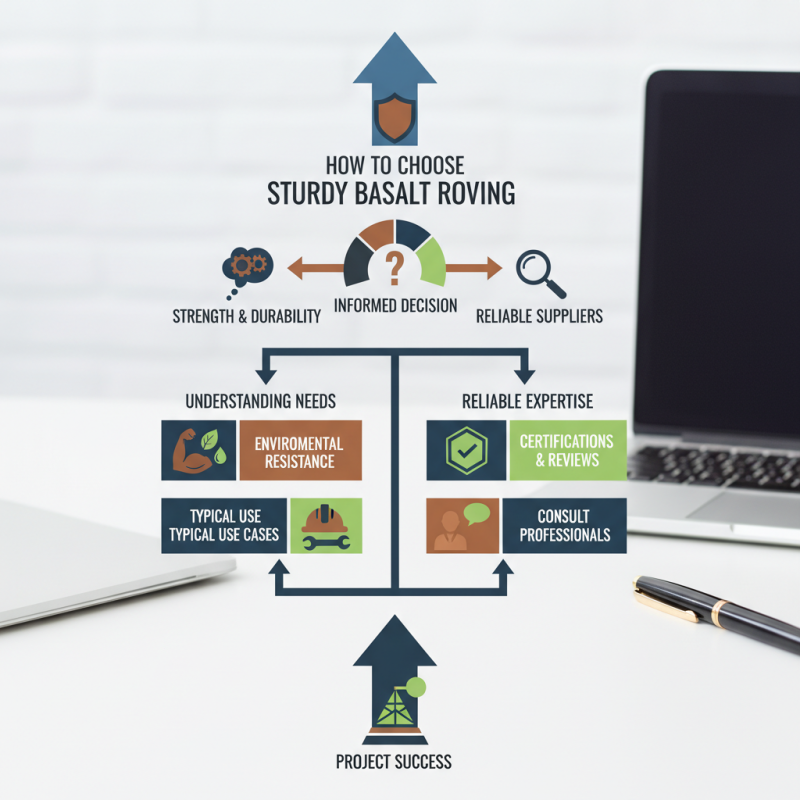
How to Choose the Best Sturdy Basalt Roving for Your Needs?

Understanding Basalt Roving: Composition and Properties

Basalt roving is a material composed primarily of basalt fibers. These fibers are derived from volcanic rock. With high tensile strength and exceptional thermal resistance, basalt roving is gaining traction in various industries. The tensile strength can reach up to 400 MPa, making it suitable for demanding applications. The density of basalt fibers typically ranges from 2.6 to 2.9 g/cm³, which allows it to withstand harsh environments.

Understanding the properties of basalt roving helps in choosing the right type for specific needs. It offers superior resistance to corrosion, outperforming traditional glass fibers. This durability comes at a weight advantage; basalt fibers are lighter than steel but with similar strength. However, the cost can sometimes be a concern. Reports indicate that basalt roving may be about 20% more expensive than glass fiber alternatives, which impacts decision-making for some buyers.

The composition of basalt fibers creates unique challenges. While the fibers can resist high temperatures, they are less flexible. This rigidity could limit applications where bending or complex shapes are required. Manufacturers must find a balance between strength and flexibility. It's essential to assess the specific requirements of your project. Make sure to consider both short-term and long-term performance attributes before making a choice.

Key Factors in Selecting Sturdy Basalt Roving for Various Applications

When selecting basalt roving, it’s crucial to consider various factors. The tensile strength is one of the most significant parameters. Reports indicate that basalt fibers can achieve a tensile strength exceeding 2500 MPa. This strength makes them suitable for applications in construction and automotive industries.

Other important factors include density and thermal properties. Basalt roving typically has a density of about 2.7 g/cm³, which is lighter than many fiberglass options. This lightweight characteristic is valuable for projects requiring reduced overall weight without sacrificing strength. Moreover, basalt has excellent thermal stability, with a continuous temperature limit around 600°C. This feature is beneficial for applications exposed to high temperatures.

It’s also crucial to evaluate the cost-effectiveness of basalt roving. While initial costs may be higher than alternatives, the longevity and durability can lead to overall savings. However, some users have reported that consistency in fiber quality can vary between batches, reflecting the need for careful supplier selection. This awareness can prevent unexpected performance issues in critical projects.

Evaluating Tensile Strength and Flexural Modulus in Basalt Rovings

When selecting basalt rovings, evaluating tensile strength and flexural modulus is crucial. Tensile strength measures a material's ability to withstand force without breaking. Basalt rovings offer impressive tensile strengths, often ranging from 300 to 700 MPa. This makes them suitable for demanding applications in construction and automotive industries.

Flexural modulus, on the other hand, indicates a material’s stiffness. Basalt rovings typically show a flexural modulus between 20 to 40 GPa. This property impacts the performance of composite materials. Higher modulus signifies superior resistance to deformation under load. Such characteristics make basalt rovings attractive in sectors requiring durability and light weight, like aerospace engineering.

However, not all basalt rovings perform identically. Variability in production processes can affect these properties. Factors such as fiber diameter and the treatment of roving play significant roles. It's essential to verify data from reliable sources and conduct real-world testing to ensure performance matches expectations. Ignoring these aspects can lead to inadequate material choices.

Comparing Basalt Roving to Other Reinforcement Materials: A Performance Analysis

When comparing basalt roving to other reinforcement materials, performance is key. Basalt roving is known for its excellent thermal resistance. It withstands high temperatures far better than glass fibers. This makes it a valuable choice for applications in hot environments. The tensile strength of basalt roving is also impressive. It often exceeds that of traditional materials.

However, the weight of basalt roving can be a concern. It’s heavier than some fiber options, which may affect design choices. In terms of cost, basalt roving can be more expensive than glass fibers. This price point may limit its accessibility for smaller projects. Each project should weigh these factors carefully.

Another aspect to consider is durability. Basalt roving shows remarkable resistance to chemical corrosion. This can provide longevity in applications exposed to harsh substances. On the downside, while it performs well, some users find its processing more complex. Techniques and machinery may need adjustments. Understanding the nuances of basalt roving is vital for optimal use.

Performance Comparison of Basalt Roving with Other Reinforcement Materials

Assessing Environmental Impact and Sustainability of Basalt Roving Usage

When considering the use of basalt roving, environmental impact plays a vital role. This material is derived from basalt rock, which is abundant and primarily consists of natural minerals. Its extraction impacts the landscape, though less than synthetic alternatives. Choosing basalt roving may contribute to a more sustainable future.

Sustainability is not just about material origin. It involves assessing the entire lifecycle. Basalt roving is known for durability, but how is it disposed of? Current recycling options are limited. This raises questions about long-term effects. While basalt roving has lower carbon emissions during production, we must evaluate its end-of-life scenarios.

Moreover, the energy involved in production cannot be overlooked. During manufacturing, basalt requires high temperatures, raising energy concerns. Even though it is stronger than conventional fibers, this process needs scrutiny. Can we find ways to enhance the efficiency of basalt roving production? These considerations are crucial. They encourage a deeper look into not just the benefits, but also the complexities of using basalt materials in various applications.

FAQS

: What is the tensile strength of basalt roving?

: Basalt fibers can achieve a tensile strength exceeding 2500 MPa, making them highly effective in construction.

How does the density of basalt roving compare to fiberglass?

Basalt roving has a density of about 2.7 g/cm³, which is lighter than many fiberglass options.

What are the thermal properties of basalt roving?

Basalt has excellent thermal stability, with a continuous temperature limit around 600°C, suitable for high-temperature applications.

Is basalt roving cost-effective?

Although initial costs can be higher, durability may lead to overall savings in the long run.

Does the quality of basalt roving vary?

Yes, consistency in fiber quality can vary between batches. Careful supplier selection is essential.

How does basalt roving perform in hot environments?

It has excellent thermal resistance and can withstand high temperatures, making it suitable for hot environments.

Are there concerns about the weight of basalt roving?

Yes, basalt roving is heavier than some alternatives, which can impact design choices.

How does basalt roving resist chemical corrosion?

Basalt shows remarkable resistance to chemical corrosion, promoting longevity in harsh environments.

What challenges come with processing basalt roving?

Its processing can be more complex, and adjustments to techniques and machinery may be necessary.

What is a potential downside of using basalt roving?

Some users find that while it performs well, the complexity of processing can be a drawback to consider.

Conclusion

Choosing the best sturdy basalt roving requires an understanding of its composition and unique properties, which contribute to its performance in various applications. Key factors to consider include tensile strength, flexural modulus, and suitability for specific projects. By comparing sturdy basalt roving with other reinforcement materials, one can evaluate its advantages in terms of durability and effectiveness.

Additionally, it is essential to assess the environmental impact and sustainability of basalt roving usage, as these elements increasingly influence material selection in today’s eco-conscious market. Overall, understanding these factors ensures that you select the most appropriate sturdy basalt roving to meet your specific needs and contribute to sustainable practices.


Oliver

Oliver

Oliver is a seasoned marketing professional with a wealth of expertise in driving brand awareness and engagement. With a deep understanding of our company's product offerings, he consistently delivers high-quality content that enriches our professional blog. His insights not only shed light on......