Choosing the right Kneeted Basalt Sleeve requires more than comparing prices or catalog photographs. The sleeve must match the cable, hose, or component it protects. Its diameter, expansion range, wall thickness, and temperature rating all matter. A loose sleeve can slide during installation. A tight one may resist fitting and create unwanted stress.
In practical applications, basalt fiber offers strong heat resistance, abrasion protection, and useful electrical insulation. However, performance depends on the braid structure, coating, and manufacturing quality. Check the technical datasheet carefully. Look for continuous and peak temperature ratings, melting behavior, chemical resistance, and size tolerances. Ask whether testing follows recognized industry methods. Supplier experience also matters. A reliable manufacturer should explain production controls, inspection records, and application limits without vague promises.
Small details often decide the result. Measure the largest connector before ordering. Leave enough expansion for bends and movement. Examine the sleeve under light for broken strands or uneven knitting. Test a sample near the intended heat source when possible. Laboratory data helps, but real installation conditions can be less forgiving. I have seen specifications appear suitable until vibration exposed a weak fit. That is worth remembering.
There is no universal best choice. The correct Kneeted Basalt Sleeve balances protection, flexibility, installation effort, and service life. Consider future maintenance, not only initial cost. A slightly more expensive sleeve may reduce replacement work later. Still, assumptions should be checked. Confirm every critical figure with the supplier before production use. Good selection is careful, evidence-based, and specific to the application.
How to Choose the Best Knitted Basalt Sleeve?
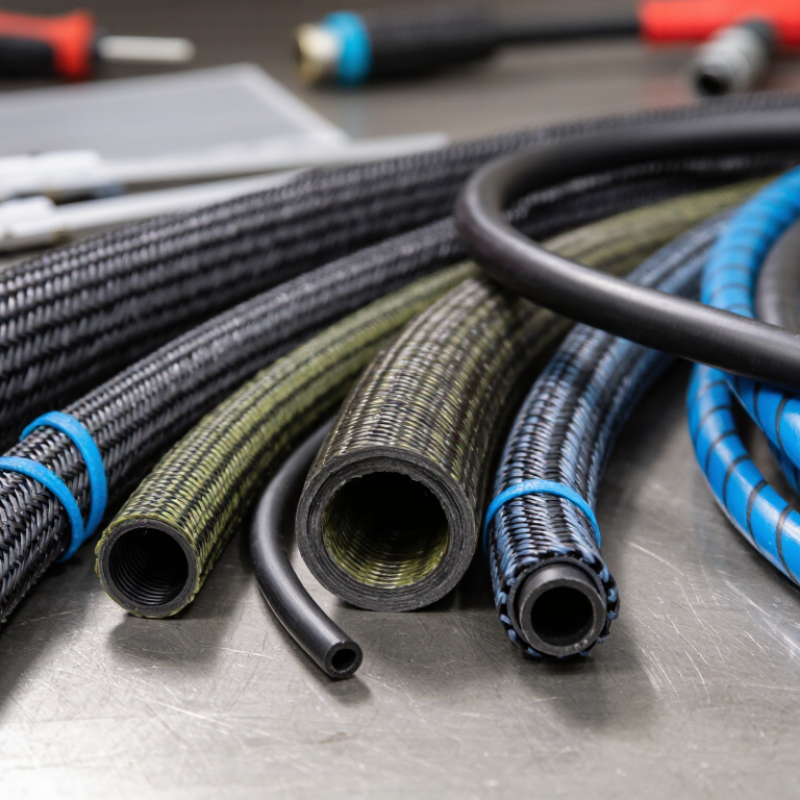
Understanding the sleeve’s structure is more useful than trusting a product label. Knitted basalt sleeves are made from basalt fibers looped into a flexible tube. This construction allows the sleeve to bend around cables, hoses, and irregular components. It also tolerates vibration better than many rigid protective covers. The open knit can expand slightly, but sizing still matters. A sleeve that is too loose may slide during operation. Too tight, and it may restrict movement or installation.
Basalt fiber offers strong heat resistance, good abrasion protection, and low flammability. However, the final temperature rating depends on coatings, stitching, and nearby materials. Never judge performance from the fiber alone. Check tested operating temperatures, continuous exposure limits, and chemical compatibility. Some sleeves provide electrical insulation, but the complete assembly must be assessed. Moisture, oil, and repeated flexing can change performance over time. Small details matter.
During selection, measure the outside diameter and consider movement during service. Review wall thickness, expansion range, fray resistance, and installation conditions. A clean cut may need a suitable termination method. Otherwise, loose fibers can appear around the edge. Field inspection remains valuable. Laboratory data is essential, but real routing can reveal unexpected rubbing points. No sleeve fits every application perfectly. That is worth remembering. Reliable documentation, traceable testing, and technical support should guide the final choice.
| Property or Selection Factor | Typical Basalt Sleeve Data | Why It Matters | How to Choose |
|---|---|---|---|
| Base Fiber | Continuous basalt fiber yarn produced from melted natural basalt rock | Determines the sleeve's resistance to heat, flame, abrasion, and many inorganic environments. | Choose a sleeve made from continuous basalt fiber when thermal protection and mineral-based reinforcement are required. |
| Fiber Density | Approximately 2.65–2.80 g/cm³ | Basalt fiber is denser than many glass fibers but can provide a strong, compact protective structure. | Consider the total assembly weight when installing the sleeve on cables, hoses, pipes, or composite parts. |
| Continuous-Service Temperature | Often rated around 650°C, depending on construction and coating | Shows the approximate temperature range for long-term exposure without rapid loss of performance. | Select a product with a continuous rating above the actual operating temperature, including heat peaks and radiant heat. |
| Short-Term Temperature Resistance | Can reach approximately 800°C or higher for limited exposure, depending on design | Short-term resistance is useful near exhaust systems, furnaces, hot tooling, and intermittent heat sources. | Verify the permitted exposure time and whether the stated rating applies to the bare sleeve or a coated assembly. |
| Fiber Melting Range | Generally about 1,450–1,500°C | The melting range is not the same as the recommended continuous working temperature. | Use the service-temperature rating for design decisions rather than using the melting point as an operating limit. |
| Knitted Construction | Flexible tubular structure with interlocking loops | The knitted structure allows bending, expansion, and installation over irregular shapes without cutting the sleeve lengthwise. | Choose knitted construction for moving cables, curved hoses, wire bundles, and components requiring easy installation. |
| Nominal Diameter Range | Common sizes are approximately 3–100 mm; larger sizes are possible | Correct sizing affects coverage, movement, heat dissipation, and resistance to sleeve displacement. | Measure the outside diameter of the component and select a sleeve with suitable relaxed and expanded dimensions. |
| Expansion Capability | Often approximately 10–30% radially, depending on knit pattern and size | Radial expansion helps the sleeve pass over connectors, bends, and small changes in component diameter. | Check the manufacturer's minimum and maximum diameter range instead of relying only on nominal diameter. |
| Abrasion Resistance | Good resistance to mechanical rubbing; performance depends on yarn size and knit density | Protects wire insulation, hoses, and composite surfaces from contact with brackets, edges, and moving parts. | Use a denser or heavier construction for repeated movement, sharp contact points, or severe vibration. |
| Flame Behavior | Basalt fiber is non-combustible and does not normally support flame like organic textile fibers | Helps limit the contribution of the sleeve to fire propagation in high-temperature areas. | For regulated applications, confirm the complete assembly's flame, smoke, and toxicity requirements. |
| Thermal Conductivity | Approximately 1.5–2.0 W/m·K for basalt fiber; sleeve performance varies with porosity | A knitted sleeve is primarily a protective barrier and is not automatically a high-performance thermal insulator. | Add an appropriate insulating layer or reflective outer cover when significant temperature reduction is required. |
| Electrical Insulation | Typically electrically non-conductive when clean and dry | Can provide physical separation and thermal protection around wires and cables. | Confirm dielectric strength, voltage rating, moisture behavior, and any coating effects for electrical applications. |
| Chemical Resistance | Generally resistant to many oils, solvents, and inorganic environments; concentrated acids and alkalis require verification | Chemical exposure can weaken fibers, coatings, or stitching even when the mineral fiber itself is stable. | Review compatibility with the exact chemicals, concentration, temperature, and exposure duration. |
| Moisture Absorption | Low fiber moisture absorption; liquid can still pass through the open knitted structure | Water resistance of the fiber does not make an open sleeve a waterproof barrier. | Use a coated, laminated, or closed outer system when water ingress or fluid containment must be controlled. |
| Flexibility and Bendability | High flexibility compared with rigid thermal shields; minimum bend radius depends on diameter and knit density | Allows routing around bends while reducing the need for multiple rigid protection parts. | Choose a finer yarn or more open knit for frequent movement, and a heavier knit for maximum mechanical protection. |
| Edge Fray Resistance | Cut edges may fray unless secured | Fraying can reduce coverage and introduce loose fibers during installation or vibration. | Secure ends with high-temperature ties, clamps, stitching, or a compatible heat-resistant sealant. |
| Common Applications | Wire harnesses, hoses, pipes, exhaust-adjacent components, furnace wiring, and composite reinforcement | These applications benefit from flexible thermal, abrasion, and flame protection. | Match the sleeve specification to temperature, movement, chemicals, installation space, and required service life. |
| Main Limitation | Open knit is not inherently airtight, watertight, or a complete thermal-insulation system | Using the sleeve beyond its intended function may cause moisture ingress, heat transfer, or premature wear. | Combine it with coatings, reflective barriers, insulation, or an outer protective jacket when the application demands it. |
Measure the component’s full outer diameter, including connectors, clamps, and uneven surface areas. A loose sleeve may slide. A slightly smaller relaxed diameter can help when expansion is needed. Leave space for bends, fastening, and thermal movement. Check the stated expansion range before cutting.
The connector may create a tight, uneven section. I made that mistake once. Measure the widest section, not only the cable. Use a short trial piece before installing the full length. It can expose sizing problems quickly.
A tight knit provides stronger coverage and fewer exposed gaps. It suits abrasion, dust, and frequent handling. An open knit stretches more easily around bends and irregular shapes. However, it may offer less surface protection. Inspect the weave under tension.
Full-length coverage suits long cable runs exposed to heat or rubbing. Partial coverage works around joints, bends, and connection points. Overlap sections where movement or heat concentrates. Avoid excessive overlap. Too many layers can restrict flexibility.
Check the weave under bright light and measure the inner diameter. Slide a sample over the actual cable or hose. Look for loose loops, brittle fibers, oily marks, and unusual color changes. The surface should feel even. Small details matter.
No. Request current test reports, certificate numbers, testing methods, and covered product sizes. Documents should match the exact sleeve construction and dimensions. Independent testing should address heat resistance, abrasion, and dimensional stability. Paperwork can look excellent while wall thickness varies.
Ask for production lot numbers and traceable raw-material records. Request samples from different batches when consistency matters. The supplier should explain tolerances clearly. Installation guidance, storage conditions, and replacement procedures are also useful. Vague answers deserve caution.
Bend and heat a short sample repeatedly. Check it near metal edges, clamps, connectors, and vibration points. Look for splitting, shifting, fraying, or exposed sections. Review compatibility with oils, moisture, chemicals, and cleaning methods. My fitting test looked fine once, but vibration later exposed weakness.
Choosing the best Kneeted Basalt Sleeve begins with understanding its core properties. Made from basalt fibers, this sleeve offers strong resistance to heat, abrasion, vibration, and many harsh operating conditions while remaining flexible and easy to install. Before selecting a product, define the application’s temperature range, chemical exposure, mechanical stress, and expected service life. These factors determine whether the sleeve should prioritize thermal protection, electrical insulation, wear resistance, or a balanced combination of performance characteristics.
Size, weave structure, and coverage are also important. Select a diameter that allows secure fitting without excessive looseness, and consider tighter or more open weaves according to flexibility and protection needs. Evaluate wall thickness, expansion capability, certifications, dimensional consistency, and test documentation to confirm dependable quality. A reliable manufacturer should provide clear technical specifications, stable production standards, and responsive support. By comparing these factors carefully, users can select a Kneeted Basalt Sleeve that provides effective protection, practical installation, and long-term performance in demanding applications.

 Beihai Fiberglass