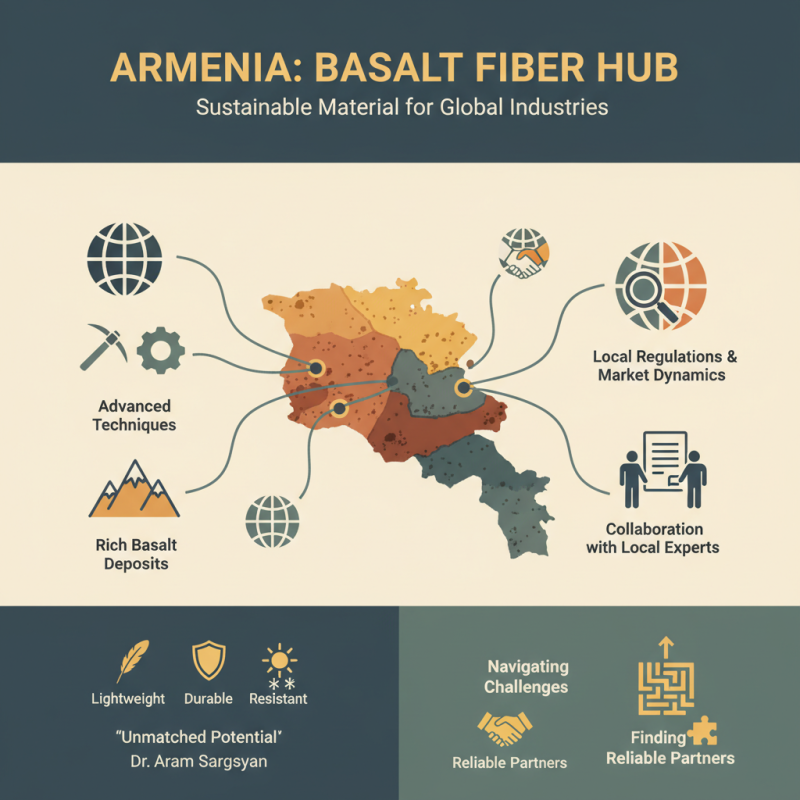
As industries worldwide seek sustainable materials, basalt fiber is gaining attention. Sourcing basalt fiber from Armenia presents a unique opportunity. This region is known for its rich basalt deposits and advanced extraction techniques. Experts believe that Armenia can become a crucial supplier in the global market.
Dr. Aram Sargsyan, a leading authority on basalt fiber, states, "Armenia holds unmatched potential in basalt fiber production." His insights underline the strategic advantages of this resource. The material is lightweight, durable, and resistant to various environmental factors.
However, sourcing basalt fiber Armenia-based requires thorough research. Companies need to understand local regulations and market dynamics. Collaboration with local experts can facilitate smoother transactions and ensure high-quality products. The potential is significant, yet companies must navigate challenges carefully. Finding reliable partners in this evolving sector can be both rewarding and complex.
Understanding Basalt Fiber and Its Applications in Global Markets
Basalt fiber is emerging as a significant material in a range of industries. Derived from basalt rock, it offers superior properties compared to traditional fibers like glass and carbon. Its lightweight nature, high strength, and resistance to temperature and chemical damage make it ideal for construction, automotive, and aerospace applications.
Armenia has rich basalt deposits, providing an opportunity for sourcing this innovative material. Local production can fulfill global demands. However, challenges exist. The technology for processing basalt into fiber is still developing. This means not all local suppliers may meet international standards. Finding reliable partners in Armenia requires careful vetting.
Understanding the specific applications of basalt fiber helps in making informed decisions. For instance, in construction, it enhances concrete strength and durability. In the automotive sector, it contributes to lightweight components, improving fuel efficiency. As global markets increasingly recognize these benefits, sourcing basalt fiber from Armenia could be a game-changer.
Exploring Armenia's Basalt Resources and Industry Infrastructure
Armenia is home to vast basalt resources. These natural materials are crucial for various industries. The country’s unique geological formations offer high-quality basalt. Mining these resources requires careful consideration of environmental impacts. Sustainable practices must be a priority for long-term industry health.
The infrastructure in Armenia supports the development of basalt fiber. Roads and transport networks enable the efficient movement of materials. However, there are challenges related to outdated machinery. Investing in modern equipment can boost productivity. Collaboration with local experts can help bridge this gap.
Despite the potential, there are areas needing improvement. Research and development efforts are still in their infancy. Increased global competition poses a risk for local producers. Armenia must enhance its competitive edge through innovation. Addressing these challenges is crucial for a sustainable basalt fiber industry.
Identifying Key Suppliers and Producers of Basalt Fiber in Armenia
When exploring the market for basalt fiber in Armenia, it's essential to identify key suppliers and producers in the region. Armenia’s unique geology allows for quality basalt fiber production. Local producers often utilize traditional methods alongside modern technology. This combination enhances product quality while maintaining sustainability.
Connecting with suppliers requires thorough research. Attend local trade shows and industry conferences. Engage with local chambers of commerce for valuable insights. Networking with industry professionals can yield potential partnerships. Be aware that not all suppliers offer the same quality. Assess their production capabilities and certifications carefully.
Tips: Visit production facilities when possible. This provides firsthand insight into operational practices. Request samples to evaluate material properties. Always check supplier reviews or feedback from previous clients. How suppliers respond to inquiries is also telling of their reliability. Building strong relationships with producers can lead to better negotiation terms.
Navigating Export Regulations and Logistics for Basalt Fiber Sourcing
Sourcing basalt fiber from Armenia presents unique opportunities. However, navigating export regulations and logistics can be complex. Understanding local laws is crucial. According to the Armenian Ministry of Economy, exporting basalt fiber has increased by 15% in the last year. This growth reflects both domestic production capabilities and global demand.
The Armenia Development Agency provides a roadmap for exporters. Compliance with customs procedures is essential. Delays can occur if documentation is incomplete. Businesses should focus on securing all necessary certifications. The importance of reliable logistics cannot be overstated. Shipping times vary and can affect supply chain efficiency. Reports suggest that sourcing materials from Armenia can reduce costs by about 10-20%, offering significant savings.
Despite these advantages, challenges persist. Market fluctuations can impact pricing. Exporters must stay informed about potential shifts in demand. Building relationships with local suppliers is vital. These connections can ease the process and provide insights into the local market. While sourcing basalt fiber from Armenia can be beneficial, thorough research and planning are necessary to navigate the complexities consistently.
Developing Partnerships and Sustainable Practices for Global Supply Chains
Developing partnerships for sourcing basalt fiber from Armenia requires a strategic approach. Research by the Basalt Fiber Manufacturers Association shows that the global basalt fiber market is projected to reach $320 million by 2026. This highlights the growing demand for sustainable materials. Armenia, with its abundant basalt deposits, can play a crucial role in meeting this demand.
However, establishing effective supply chains is not without challenges. Ensuring quality control and sustainable practices is essential. Local producers must adhere to international standards, which can require additional training and resources. Collaboration with global firms may help in sharing best practices and achieving compliance.
Sustainability should be a focal point. According to the International Journal of Sustainable Development, incorporating eco-friendly practices in sourcing can enhance brand reputation. This may also involve assessing environmental impacts and implementing circular economy principles. Without a clear strategy, there can be risks in sustainability commitments, making it vital to engage in continuous evaluation.
How to Source Basalt Fiber from Armenia for Global Supply? - Developing Partnerships and Sustainable Practices for Global Supply Chains
| Dimension |
Details |
| Geological Conditions |
Rich deposits of basalt in various regions. |
| Production Capacity |
Estimated annual capacity of 10,000 tons. |
| Export Routes |
Key logistics via road and rail to neighboring countries. |
| Sustainability Practices |
Utilization of eco-friendly technologies in production. |
| Partnership Opportunities |
Collaboration with local manufacturers and international suppliers. |
| Market Demand |
Growing interest in sustainable materials across various industries. |
Conclusion
The article "How to Source Basalt Fiber from Armenia for Global Supply?" provides a comprehensive guide on harnessing Armenia's abundant basalt resources for the production of basalt fiber, which has diverse applications in global markets. It begins by exploring the unique properties and benefits of basalt fiber, highlighting its rising demand in various industries such as construction, automotive, and aerospace.
In-depth examination of Armenia's robust basalt resources and its industrial infrastructure sets the stage for identifying key suppliers and producers within the region. The article further navigates the complexities of export regulations and logistics that come into play when sourcing basalt fiber from Armenia. Finally, it emphasizes the importance of developing partnerships and fostering sustainable practices among stakeholders to ensure an efficient and responsible supply chain for basalt fiber. This comprehensive approach positions Armenia as a strategic player in the global basalt fiber market.

 Beihai Fiberglass