 Beihai Fiberglass
1 / 5
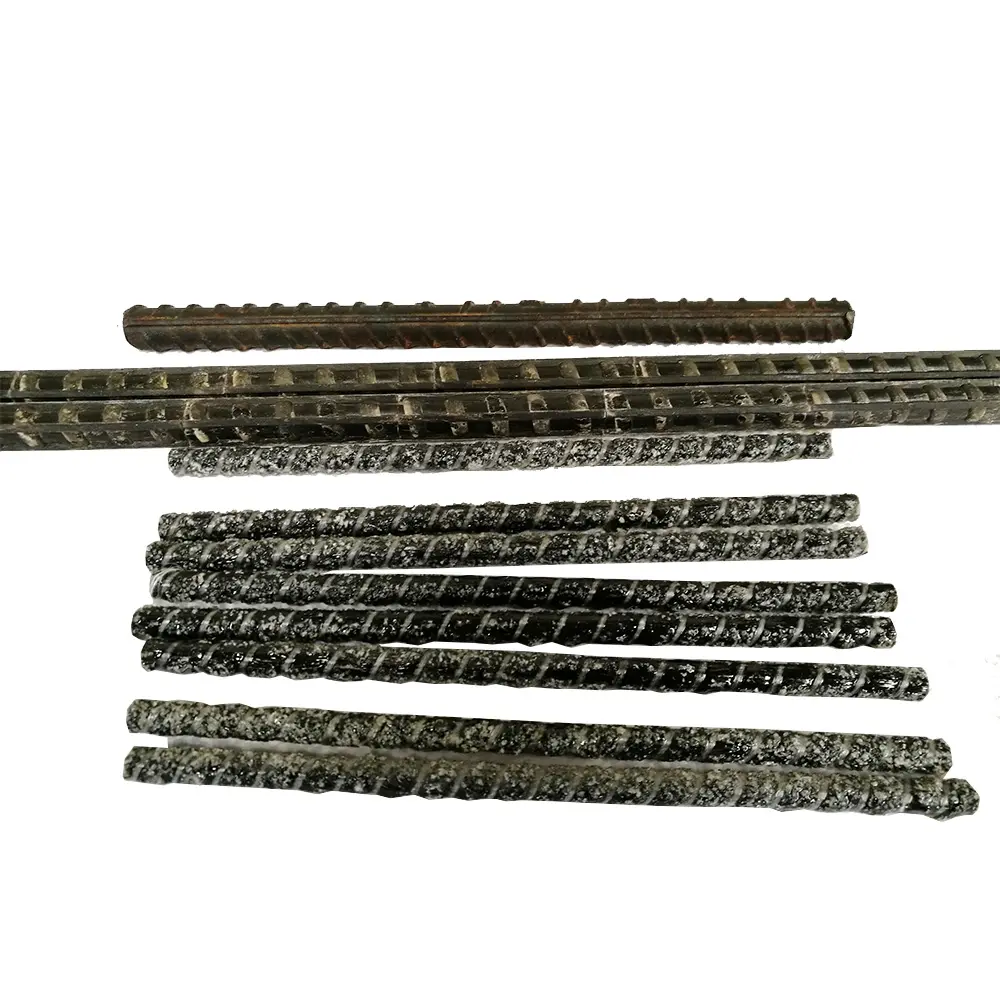
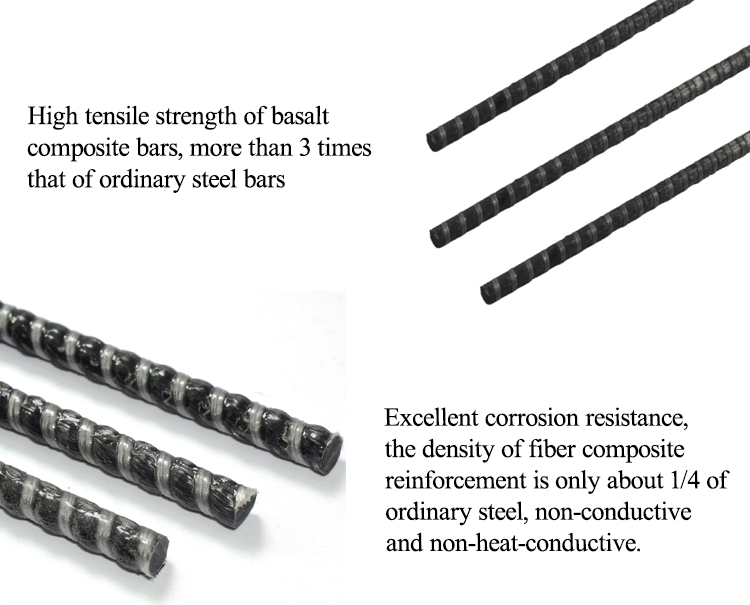
Tensile strength up to 1000-1500 MPa, significantly higher compared to ordinary rebar (about 400 MPa).
Density is only about 2.0 g/cm³, which is approximately 75% lighter than steel (7.85 g/cm³), making it highly cost-effective to transport and easy to construct.
Highly stable against aggressive corrosive media such as chlorine ions, acids, alkalis, and seawater.
Features an impressive life span of more than 50 years, making it perfectly suited for challenging environments like marine engineering and chemical processing plants.
Generates zero electromagnetic interference, ideal for magnetically sensitive facilities (e.g., hospital MRI rooms, scientific laboratories).
Outstanding electrical insulating properties effectively mitigate any risk of electrical leakage.
Exceptional performance across a wide temperature resistance range (-260°C to 600°C).
Does not soften at high temperatures and successfully maintains its high toughness at extreme low temperatures.
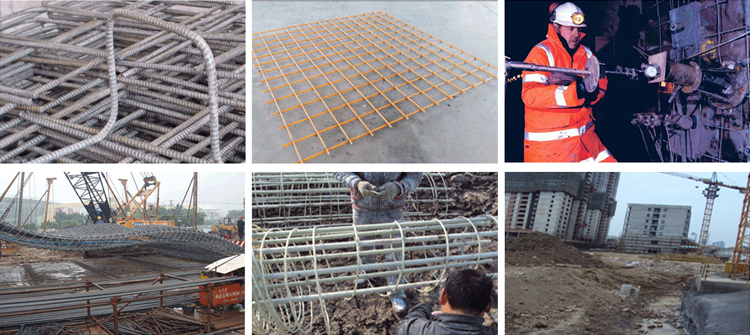
| Brand | Weight | Diameter | Cross Sectional Area | Tensile Strength | Ultimate Tension | Elastic Modulus | Limiting Strain |
|---|---|---|---|---|---|---|---|
| N/M | g/m | mm | mm² | MPa | KN | GPa | % |
| BH-4 | 26 | 4 | 12.56 | 1350 | 16.96 | 55 | 2.30 |
| BH-6 | 57 | 6 | 28.26 | 1250 | 35.33 | 55 | 2.27 |
| BH-8 | 104 | 8 | 50.24 | 1200 | 60.29 | 55 | 2.18 |
| BH-10 | 162 | 10 | 78.5 | 1200 | 94.2 | 52 | 2.31 |
| BH-12 | 219 | 12 | 113.04 | 1100 | 124.34 | 50 | 2.20 |
| BH-14 | 307 | 14 | 153.86 | 1000 | 153.86 | 48 | 2.08 |
| BH-16 | 412 | 16 | 200.96 | 1000 | 200.96 | 48 | 2.08 |
| BH-18 | 513 | 18 | 254.34 | 900 | 228.9 | 45 | 2.08 |
| BH-20 | 635 | 20 | 314 | 900 | 286.2 | 45 | 2.08 |
| BH-22 | 770 | 22 | 379.94 | 800 | 303.95 | 42 | 2.00 |
| BH-25 | 992 | 25 | 490.625 | 800 | 392.5 | 42 | 2.00 |
Basalt Rebar offers high tensile strength (up to 1000-1500 MPa) while being about 75% lighter than steel. It is highly resistant to acid, alkali, and chemical corrosion, preventing rust and ensuring concrete structural longevity in harsh marine environments.
Yes, it features exceptional thermal stability across a massive working temperature range of -260°C to 600°C. It retains its physical properties and toughness at sub-zero temperatures and does not soften easily under extreme heat.
Unlike steel rebar, Basalt Rebar is completely immune to rust, chloride ion attack, and chemical degradation. It offers a design lifespan of over 50 years, dramatically reducing maintenance costs in high-moisture or saline environments.
Yes. Because basalt is non-magnetic and electrically non-conductive, it generates zero electromagnetic interference. This makes it the ideal choice for hospital MRI suites, high-voltage power facilities, and advanced scientific research laboratories.
Key application scenarios include marine and port infrastructure (bridges, tunnels, wharves), chemical processing plants, cold-climate tundra developments, prefabricated precast concrete elements, and historic preservation repairs.