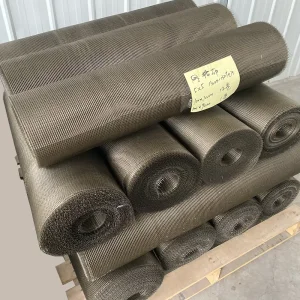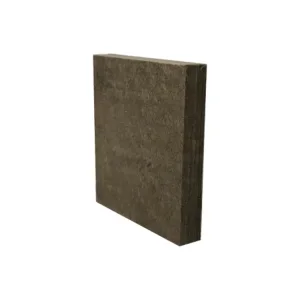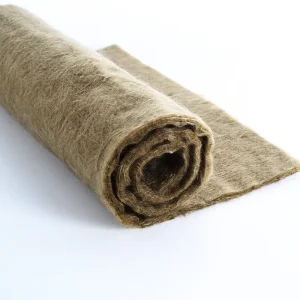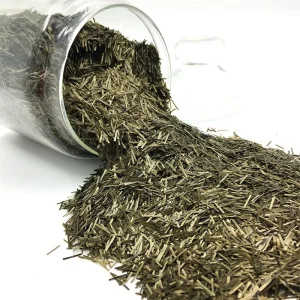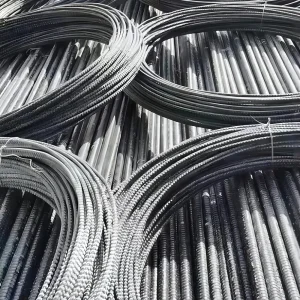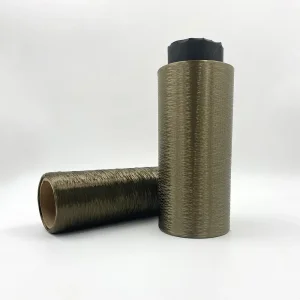
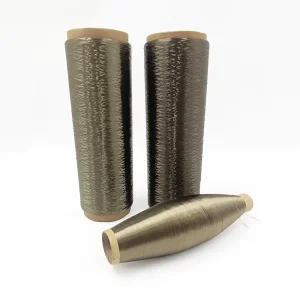
The global civil engineering paradigm is shifting. Decades of micro-cracking, chloride penetration, and steel corrosion inside reinforced concrete have cost municipal governments billions in structural rehabilitation. Consequently, civil planners and structural engineers are increasingly specifying Basalt Fiber Reinforced Polymer (BFRP) rebars as a permanent, corrosion-proof alternative to black steel, epoxy-coated steel, and fiberglass options.
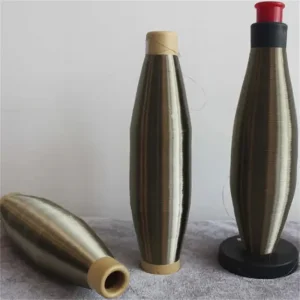
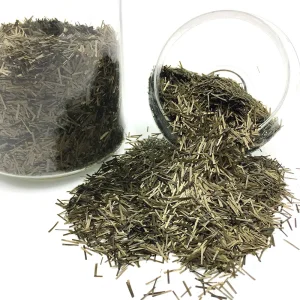
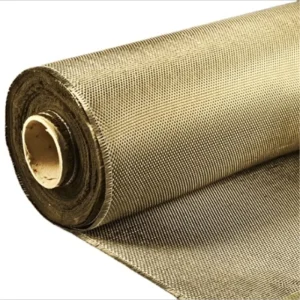
Derived directly from raw volcanic basalt rock extruded at high temperatures (approx. 1450°C), continuous basalt fibers are chemically inert, naturally alkaline-resistant, and possess a density that is only a fraction of structural carbon steel. Sourcing BFRP rebars from established Chinese hubs allows global contractors to achieve crucial ESG metrics, meet structural specifications, and significantly lower structural maintenance overhead.
Our structural BFRP products comply with international standards including ACI 440.1R / 440.11, ASTM D7957/D7957M, CSA S806, and ISO 10406-1 guidelines for non-metallic reinforcement structures.
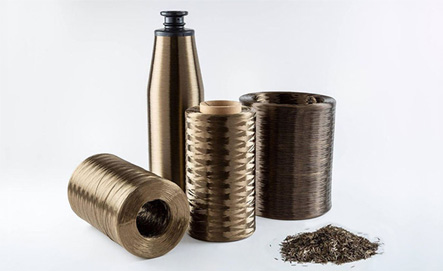
Founded in 2015 in the high-tech industrial corridor of Jiujiang, Jiangxi Province, China Beihai is a nationally certified high-tech enterprise dedicated specifically to the scientific R&D, structural formulation, thermodynamic pultrusion, and distribution of premium basalt continuous fibers and derived infrastructure elements.
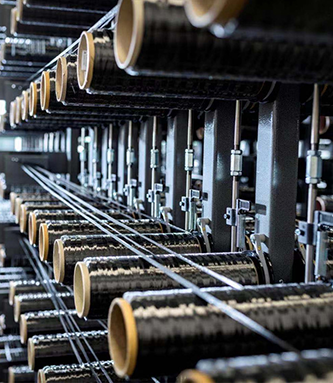
Our state-of-the-art facility integrates raw material refining, continuous fiber drawing, customized sizing chemical application, and pultrusion systems under strict ISO 9001 and ISO 14001 guidelines. Unlike traditional compounders, China Beihai designs and manufactures its own proprietary basalt fiber continuous drawing furnaces. This vertical integration allows us to achieve unmatched thermodynamic stability during raw glass transition, yielding incredibly low filament-diameter dispersion rates.
To assist structural engineers, geotechnical consultants, and procurement managers in verifying the comparative efficiency profiles of core reinforcement agents, the technical data below outlines key mechanical metrics.
| Performance Criterion | BFRP Rebar (Beihai) | Structural Carbon Steel | Glass FRP (GFRP) | Carbon FRP (CFRP) | |
|---|---|---|---|---|---|
| Tensile Strength (MPa) | 1,100 - 1,400 | 400 - 550 | 600 - 900 | 1,600 - 2,400 | |
| Elastic Modulus (GPa) | 50 - 65 | 200 | 40 - 50 | 120 - 150 | |
| Density (g/cm³) | 1.9 - 2.1 | 7.85 | 1.8 - 2.0 | 1.5 - 1.6 | |
| Corrosion Resistance | Excellent (Chloride Proof) | Poor (Oxidizes/Rusts) | Excellent | Excellent | Excellent |
| Alkali Stability (Inside Concrete) | Excellent (High pH inert) | Highly Susceptible | Variable (Needs specific resin) | Excellent | |
| Electromagnetic Profile | 100% Non-Conductive | High Conductivity | Non-Conductive | Conductive | |
| Thermal Expansion (10⁻⁶/°C) | 8.0 - 9.0 (Concrete Matched) | 12.0 | 9.5 | 0.0 - 1.0 (Thermal Mismatch) |
Provides crack-arresting concrete reinforcement structures for municipal highways, commercial foundations, retaining walls, slab-on-grade applications, and continuous concrete pavements.
Engineered to withstand cyclic salt-spray, splash zones, sea walls, and marine berths without corrosion-induced expansion. Prevents concrete spalling over long service lives.
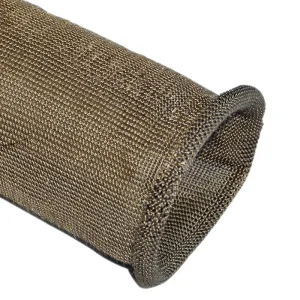
Provides lightweight continuous roving, high-temperature composite sleeves, and customized aerospace-grade structural components to withstand extreme operating conditions.
Offers chemical-resistant containment reinforcement solutions, storage tank structural backings, and high-temp non-reactive basalt sleeves for corrosive pipelines.
The ongoing R&D framework at China Beihai centers on optimizing the **Fiber-Resin-Concrete** interface. While basalt is naturally robust, structural reinforcement in extreme environments demands chemical stability across centuries.
To achieve this, our research laboratories have developed a proprietary **Organosilane-Epoxy Coupling Sizing Agent**. Applied immediately during the filament drawing phase before contact winding, this ultra-thin coupling coat forms a covalent bridge between the inorganic basalt molecules and the organic vinyl ester polymer resin matrix.
Furthermore, our technical roadmap incorporates **Multi-Walled Carbon Nanotube (MWCNT) infusion** into the liquid resin bath before pultrusion. This creates an interpenetrating polymer network (IPN) at the rebar core, boosting shear resistance by up to 22% and improving micro-crack resistance under heavy seismic loading profiles.
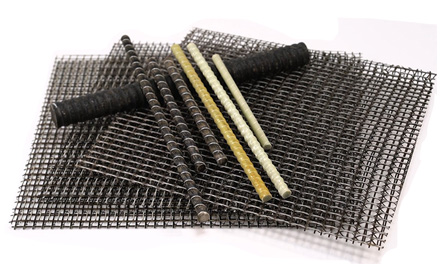
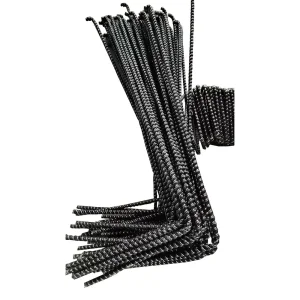
We offer modular structural length customization, custom helical pitches, specific rebar diameters (from 4mm up to 32mm), and complete bent rebar profiles (stirrups, L-bars, custom curves) manufactured directly in-house prior to curing.
Providing complete mill test report documentation, thermal testing parameters, fire behavior data sheets, structural shear capacity testing, and custom chemical composition certifications required by local customs and authorities.
Leveraging the proximity of Jiujiang Port, we coordinate optimized maritime shipments through Shanghai, Ningbo, or Shenzhen. Products are carefully packed in weather-resistant polymer bundles on heavy wooden cradles to prevent abrasions.
Concrete pore solutions typically range in pH from 12.5 to 13.5. This alkali level can cause stress-corrosion in silica-rich composites. China Beihai mitigates this risk in two ways: first, our raw volcanic rock features a precise chemical composition high in Alumina (Al₂O₃) and Iron oxides (Fe₂O₃ / FeO), which are naturally more alkali-resistant than silica. Second, we coat the fibers in a custom epoxy-vinyl ester resin, providing a protective barrier against chemical penetration.
Due to the thermoset polymer matrix of cured pultruded composites, BFRP rebars cannot be reshaped or bent on-site. Any attempt to bend them cold will rupture the structural matrix. Therefore, all geometric configurations, including stirrups, curves, hooks, and corner bends, must be specified during detailing. We pre-shape and cure these components under controlled factory conditions prior to final thermodynamic crosslinking.
Our BFRP rebars feature distinct ribbing and are coated in fine quartz sand, yielding a high bond coefficient (typically greater than 0.9 under pull-out test regimes). This ensures excellent mechanical load transfer between the cured concrete matrix and the interior core reinforcement, effectively controlling micro-crack propagation.
Pure, raw basalt continuous fiber remains stable under temperatures exceeding 600°C. However, in structural composites, the maximum temperature rating is governed by the resin matrix's glass transition temperature (Tg), which is typically between 110°C and 130°C. For specialized high-temperature applications, we utilize customized high-Tg resin blends to extend this performance envelope.
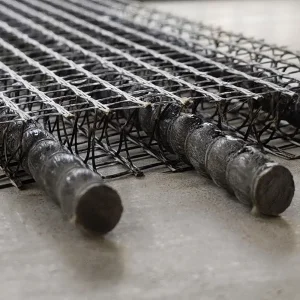

As smart systems, autonomous equipment, and robotic manufacturing centers require specialized non-magnetic operating environments, BFRP rebars provide critical electromagnetic transparency.
Read Full Report
China Beihai successfully completes facility modernization, optimizing sizing baths, continuous drawing lines, and heat treatment ovens in the Jiujiang facility.
Read Full Report
Recent lifecycle assessments demonstrate that BFRP rebars cut carbon output by up to 74% compared to galvanized steel options, supporting sustainable green construction initiatives.
Read Full Report Beihai Fiberglass