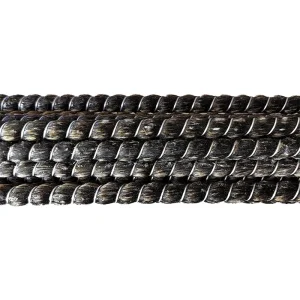
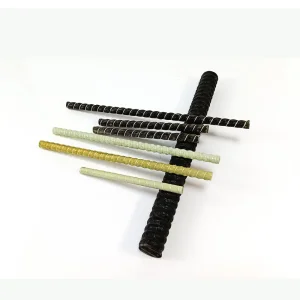
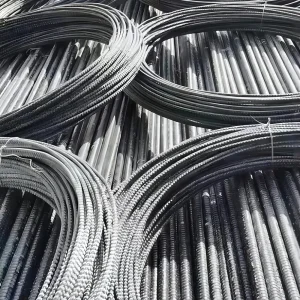
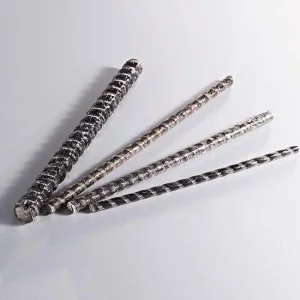
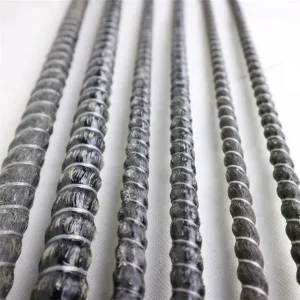
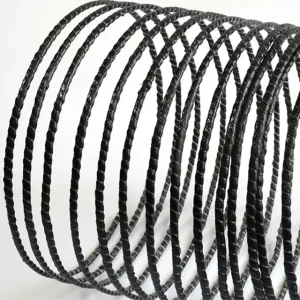
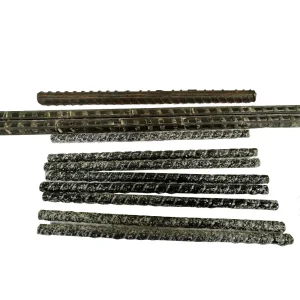
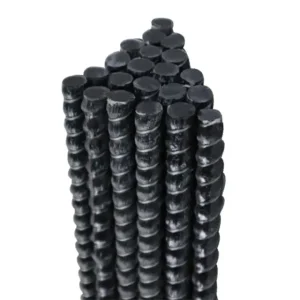
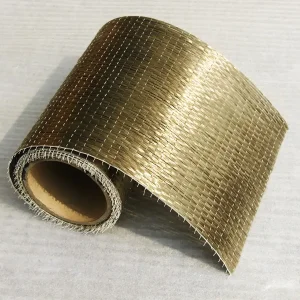
Germany stands at a pivotal intersection of Industrie 4.0 and the European Green Deal. As the largest economy in Europe, its construction and automotive sectors are under immense pressure to reduce carbon footprints while maintaining structural integrity. Basalt Fiber Reinforced Polymer (BFRP) rebar has emerged not merely as a substitute for steel, but as a superior engineering evolution.
Globally, the BFRP market is projected to grow at a CAGR of 12.5%. In Germany, the adoption is driven by the Federal Ministry for Digital and Transport (BMDV) and their focus on "Maintenance-Free Infrastructure." While the US and China focus on sheer volume, German engineering prioritizes long-term lifecycle costing (LCC). By using Basalt Fiber Rebar, German developers are eliminating the "concrete cancer" (corrosion) that plagues bridges in the Ruhr area and coastal regions like Hamburg.
Germany's bridge network requires massive upgrades. BFRP is used in thin-layer deck reinforcements, allowing for thinner concrete slabs without the risk of salt-induced corrosion from winter de-icing agents.
In high-tech medical facilities in Berlin and Munich, non-conductive and non-magnetic basalt rebar is essential for MRI rooms to prevent interference with sensitive diagnostic equipment.
The Port of Hamburg utilizes basalt fiber for quay wall reinforcements. Being chemically inert, it withstands the aggressive pH levels of saltwater and industrial runoff.
Foundations for offshore wind turbines and geothermal plants in Bavaria utilize BFRP for its thermal stability and dielectric properties, preventing current leakage in sensitive energy hubs.
The next decade of Basalt Fiber technology focuses on Hybrid Integration and Smart Composites. We are currently developing "Sensing Rebars" that integrate fiber optic sensors directly into the basalt roving. This will allow German engineers to monitor the structural health of a bridge in real-time via 5G networks.
As a leading manufacturer, we strictly adhere to German DIN 1045 and international ACI 440 standards. Our technical roadmap includes the transition from traditional epoxy resins to bio-based resins, further aligning our production with the sustainability goals of our European partners.
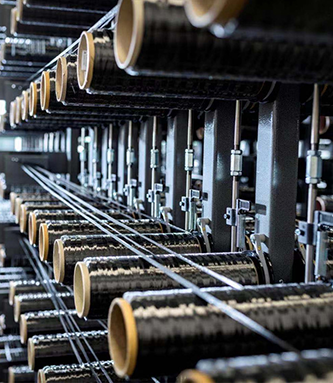
China Beihai, founded in 2015, is a high-tech enterprise focusing on the R&D, production, and sales of high-performance continuous basalt fiber. We operate at the forefront of the industry, providing critical material solutions to the German and global markets. Our technical team consists of PhD-level materials scientists dedicated to pushing the boundaries of composite durability.
Choosing to work with China Beihai means working with a leading manufacturer that prioritizes Quality, Innovation, and Sustainability. Our products meet the diverse needs of various industries, providing high-quality solutions for infrastructure, automotive, and aerospace sectors.
While DIN standards are traditional, current Eurocode 2 (EC2) updates and individual project approvals (Zulassung im Einzelfall) allow BFRP use in many German states, particularly for non-load-bearing or specialty structural elements like bridge edges and MRI facilities.
The coefficient of thermal expansion (CTE) of Basalt Rebar is very similar to that of concrete. This prevents internal stresses and delamination during Germany's freezing winters and hot summers, a common failure point for GFRP (Glass Fiber).
We provide preliminary technical quotes within 24 hours. Logistics to Germany (via rail or sea) are optimized for major hubs like Duisburg or Hamburg, ensuring competitive pricing and reliable timelines.
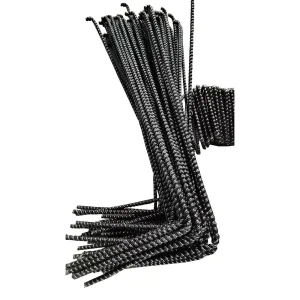
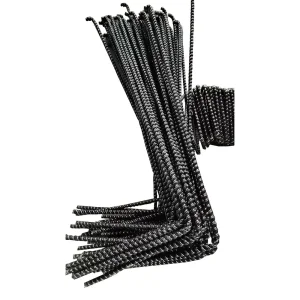
No, like all FRP materials, BFRP cannot be bent once cured. Custom shapes (stirrups, 90-degree bends) are manufactured at our factory based on your technical drawings and then shipped ready-to-install.
 Beihai Fiberglass