Key Advantages
1
High Strength
Basalt fibers have a high tensile strength, making them suitable for applications where strength is crucial, such as in construction and aerospace.
2
Lightweight
Basalt fibers are lightweight compared to materials like steel, which can contribute to weight reduction in composite materials without sacrificing strength.
3
Corrosion Resistance
Basalt fibers are inherently resistant to corrosion, making them ideal for use in environments where exposure to harsh chemicals or moisture is a concern.
4
Thermal Stability
Basalt fibers exhibit excellent thermal stability, retaining their mechanical properties at high temperatures. This makes them suitable for fire protection systems and high-temperature insulation.
5
Electrical Insulation
Basalt fibers are non-conductive, making them useful in applications where electrical insulation is required.
Product Specification
| Item |
Basalt Roving |
| Type of Size |
Silane |
| Size Code |
BH |
| Typical Linear Density (tex) |
500 |
200 |
600 |
700 |
400 |
1600 |
1200 |
| 300 |
1200 |
1400 |
800 |
2400 |
- |
| Filament (μm) |
15 |
16 |
16 |
17 |
18 |
18 |
22 |
Compatibility with various resins is assured by appropriate sizings.
Industrial Applications
✔
Construction and Infrastructure
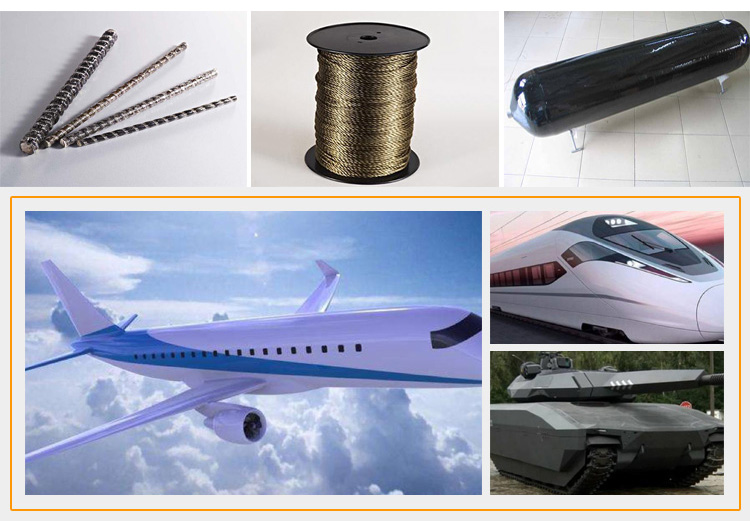
Reinforcement of concrete structures, enhancing durability for buildings, bridges, and roads with resistance to wear and tear.
✔
Automotive Industry
Contributing to lighter and stronger parts, leading to improved fuel efficiency and overall vehicle performance.
✔
Aerospace Sector
High strength-to-weight ratio and thermal resistance make it suitable for insulation and structural components.
✔
Marine Applications
Saltwater corrosion resistance and bio-resistance make it ideal for shipbuilding and underwater pipelines.
✔
Sports Equipment
Manufacture of high-performance sporting goods, offering enhanced durability and improved safety.
Frequently Asked Questions
What makes Basalt Roving superior to steel in construction?
Basalt roving is significantly lighter than steel and possesses inherent corrosion resistance, which prevents structural degradation in moisture-heavy environments.
Can Basalt Roving withstand high-temperature environments?
Yes, basalt fibers exhibit excellent thermal stability, allowing them to retain mechanical properties even at high temperatures, making them ideal for fire protection.
Is this product compatible with different types of resins?
Absolutely. Compatibility with various resin systems is ensured through the application of appropriate silane-based sizings during production.
Why is Basalt Roving used in marine applications?
It is chosen for its exceptional resistance to saltwater corrosion and bio-resistance, which are critical for the longevity of shipbuilding and underwater infrastructure.
Does Basalt Roving provide electrical insulation?
Yes, basalt fibers are non-conductive, providing excellent electrical insulation for specialized industrial applications.
What linear densities are typically available?
Typical linear densities range from 200 tex to 2400 tex, catering to various reinforcement requirements across industries.
 Beihai Fiberglass