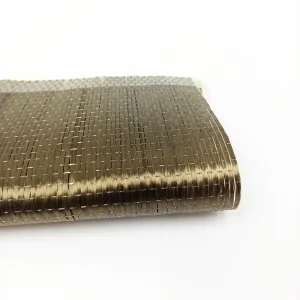
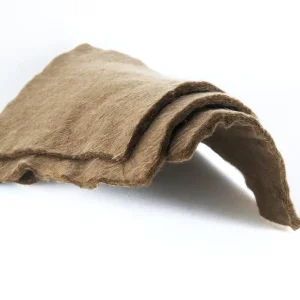
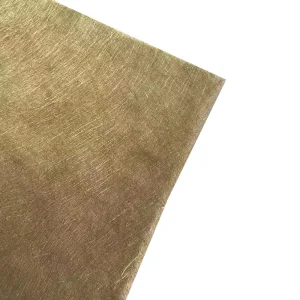
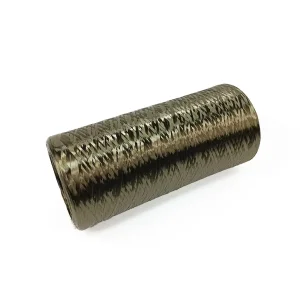
Precision-engineered products for high-stress industrial applications
The global market for Basalt Fiber Reinforced Polymer (BFRP) is witnessing an unprecedented CAGR of over 12.5%. As the world moves toward sustainable construction, basalt—a natural volcanic rock—has emerged as the premier eco-friendly alternative to glass and carbon fibers. In Europe and North America, strict environmental regulations are driving the adoption of basalt bars in marine engineering and chemical plant construction.
China has established the world's most sophisticated basalt fiber supply chain. Leveraging Jiangxi's rich mineral resources, China Beihai Group integrates advanced pultrusion technologies with economies of scale. This results in a 30-40% cost reduction compared to Western counterparts while maintaining rigorous international quality standards (ISO/CE).
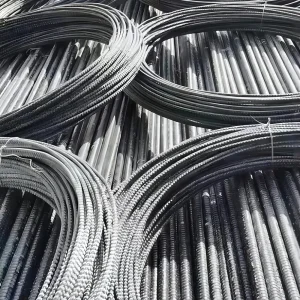
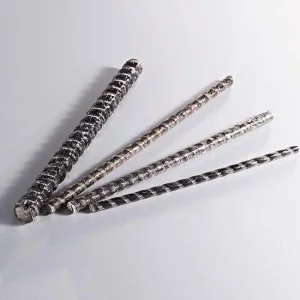
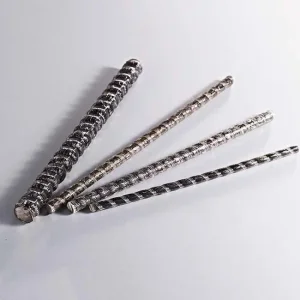
Unlike traditional steel rebar, basalt glass bars (BFRP) are 100% non-corrosive and non-conductive. They offer a tensile strength 2.5 times higher than steel at only 1/4 of the weight. This makes them indispensable for magnetic resonance imaging (MRI) rooms, bridge decks exposed to de-icing salts, and coastal sea walls.
Strategic data for procurement officers and structural engineers
Tensile Strength
Working Temp
Rust/Corrosion
Weight Reduction
Basalt fiber is manufactured through a single-component melting process of volcanic basalt rock at 1450°C. This "green" manufacturing process requires no chemical additives, making BFRP bars the most sustainable choice for LEED-certified projects. In bridge pier protection and petrochemical facility reinforcement, the lifecycle cost of basalt is significantly lower than steel, as it eliminates the need for expensive cathodic protection and periodic maintenance.
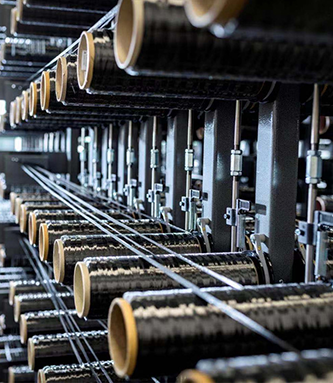
Founded in 2015 and located in Jiujiang, Jiangxi Province, China Beihai is a high-tech enterprise focusing on the research, development, production, and sales of high-performance basalt continuous fiber. As a leading enterprise in the domestic industry, we have pioneered the manufacturing of specialized production equipment that ensures uniform fiber diameter and superior resin bonding. Our commitment to excellence has made us a thought leader and a trusted supplier for global engineering giants.
Where Basalt Fiber transforms structural integrity
Ideal for seismic reinforcement and high-alkali concrete environments.
Sea walls, docks, and offshore platforms where salt-water corrosion destroys steel.
Lightweight shell materials and thermal protection systems for next-gen aircraft.
Engine components and chassis reinforcement to meet lightweighting trends.
Non-sparking, high-strength rock bolts for underground safety.
Reinforcing wind turbine blades and geothermal piping systems.
Bridges, highways, and bridge pier protection against vehicle collision.
Unmatched acid/alkali resistance for chemical storage tank foundations.
The basalt industry is currently undergoing a "Digital Twin" transformation. Smart factories in China, like Beihai, are implementing AI-driven quality control to monitor fiber tension and resin impregnation in real-time. This ensures that every meter of basalt rebar delivered to international markets—be it for a bridge in Norway or a skyscraper in Dubai—meets the exact mechanical specifications required.
What Global Buyers are Demanding: Procurement officers are no longer just looking at the price per ton. They are evaluating "Information Gain"—seeking detailed technical white papers, fire-resistance certifications (ASTM E119), and environmental impact declarations (EPDs). China's efficiency advantage is no longer just about labor; it's about the speed of R&D and the ability to customize fiber sizing for specific epoxy systems.
Expert insights into Basalt Fiber Glass Bars
Yes. Basalt fiber rebar offers higher tensile strength and a significantly higher modulus of elasticity compared to standard E-glass. Furthermore, basalt is naturally resistant to the alkaline environment of concrete, whereas glass fiber requires a special coating to prevent degradation.
Like all composite reinforcement, BFRP bars cannot be bent after the resin has cured. Any bends (stirrups, hooks) must be specified during the design phase and manufactured at the factory. However, their lightweight nature makes them much easier to handle than steel.
While steel-reinforced structures in corrosive environments may begin to fail in 20-30 years, basalt-reinforced structures are designed for a 100-year service life with zero maintenance, as the primary cause of concrete spalling—rebar rust—is eliminated.
Due to our integrated production chain and proximity to raw material sources in Jiangxi, our quotes are typically 20-35% more competitive than North American or European manufacturers, without compromising on ASTM or ISO standards.
Secure Your Project with China's Premier Basalt Supplier
The Efficient Operation of Smart Equipment Underpinned by "Hardcore Support"
As drones slice through the sky to monitor wildfires and intelligent robots execute repetitive tasks with precision, the efficient operation of this smart equipment is often underpinned by basalt fiber composites. Our research team has made it possible to use basalt fibers in the manufacture of spacecraft shell materials and high-temperature-resistant components. By choosing China Beihai, you are partnering with a forward-thinking leader dedicated to pushing the boundaries of what volcanic rock can achieve.

 Beihai Fiberglass