Explore our leading composite reinforcing products optimized for harsh marine and chemical containment environments.
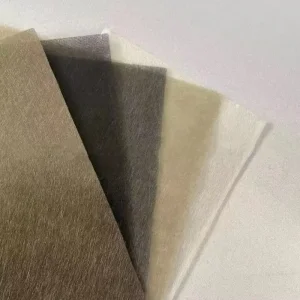
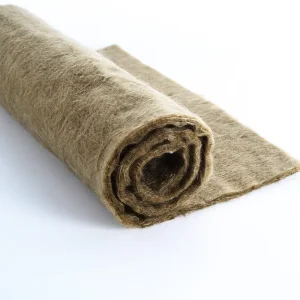
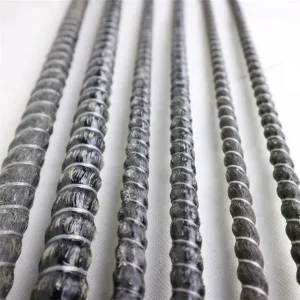
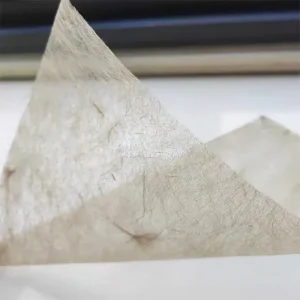
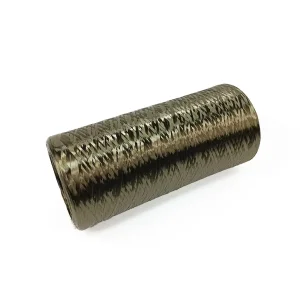
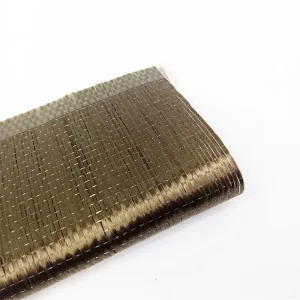
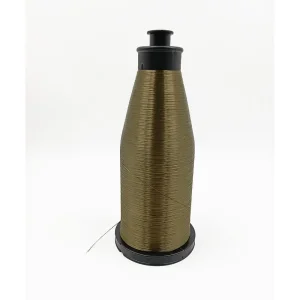
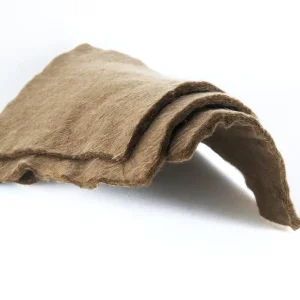
In global infrastructural deployment, concrete failure via traditional reinforcing steel corrosion represents the single most catastrophic material limitation of the 21st century. Standard epoxy-coated steel rebars, though widely implemented, suffer from localized pinholes or micro-fractures in the thermoset barrier, generating galvanic micro-cells that accelerate internal concrete carbonation and chloride-induced deterioration.
China Beihai, established in 2015 and headquartered in Jiujiang, Jiangxi Province, has pioneered a high-tech material revolution. As a high-performance continuous basalt fiber manufacturing powerhouse, China Beihai resolves the fundamental flaws of legacy steel rebar. By infusing premium basalt continuous fibers with cutting-edge proprietary epoxy resin composite technologies, we design an advanced, ultra-dense composite rebar system. These rebars present zero metallic corrosion risks, exceptionally high tensile strength ratios, and perfect resistance to extreme alkaline concrete pore solutions.
Corrosion-Free Lifetime Guarantee in Acidic, Saline, and Alkaline Structural Environments
Understanding the macro-economic and geotechnical demand for advanced basalt and epoxy composite reinforcements.
Seaports, seawalls, breakwaters, and deep-sea wind turbine foundation piles operate under constant hydrodynamic cycles and aggressive chloride splashes. Epoxy basalt composite rebars completely neutralize marine micro-cracking and eliminate structural decay.
Bridge decks, toll gates, and highway elevated ramps exposed to seasonal freeze-thaw cycles and calcium-chloride de-icers undergo rapid internal delamination. Overcoming these mechanical and chemical challenges requires highly inert, zero-expansion composite reinforcements.
Desalination units, wastewater processing cells, chemical refinery storage pads, and petrochemical facilities demand extreme chemical resilience. Traditional steel solutions fail rapidly, making epoxy pultruded basalt composite the definitive standard.
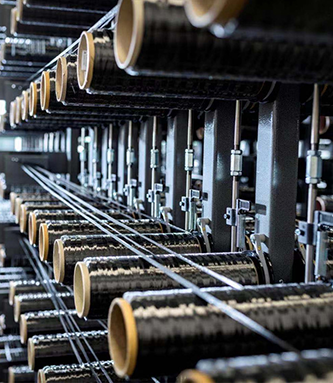
Operating from the industrial manufacturing zone of Jiujiang, Jiangxi, China Beihai features state-of-the-art pultrusion manufacturing lines, proprietary fiber drawing systems, and fully automated chemical resin compounding systems. Our factory's vertical integration translates directly into exceptional market advantages for global contractors and procurement leads:
Concrete design analysis mapping standard carbon steel against epoxy composite basalt reinforcements under rigorous ASTM and ACI testing regimes.
| Performance / Material Parameter | Legacy Carbon Steel Rebar | Standard Epoxy Coated Steel | China Beihai Basalt Epoxy Rebar |
|---|---|---|---|
| Tensile Strength (MPa) | 400 - 550 MPa | 400 - 550 MPa | 1100 - 1400 MPa |
| Density (g/cm³) | 7.85 | 7.90 | 1.9 - 2.1 (Ultra Lightweight) |
| Corrosion in Chloride Environments | Catastrophic Failure | Moderate to High Risk (Pinhole Corrosion) | Zero Degradation (Inert) |
| Electromagnetic Neutrality | Highly Conductive | Highly Conductive | 完全绝缘 Non-Conductive / Ideal for MRI & Rail Slabs |
| Thermal Expansion Matrix (α) | 11.7 x 10⁻⁶ /°C | 11.7 x 10⁻⁶ /°C | 7.0 - 9.0 (Closer to Concrete Thermal Profile) |
| Service Life Cycle (Years) | 15 - 25 Years | 25 - 40 Years | 100+ Years (Infrastructural Permanence) |
From sub-zero railway foundations to superheated chemical pads: engineered performance for critical applications.
Extreme salt-splash profiles degrade coastal bridge piers within decades. Utilizing sand-coated basalt epoxy composite rebars guarantees structural integrity, preventing dangerous concrete spalling and structural load collapse.
Corrosive acid fumes, hydrocarbon vapors, and hypersaline wastewater cause swift deterioration of industrial flooring. Our composite rebars provide complete chemical resistance across the full pH spectrum.
Magnetic fields generated by modern medical MRI diagnostics and RFID arrays at automated highways demand zero metallic interference. Our entirely non-magnetic basalt epoxy rebars prevent spatial distortion and operational interference.
Navigating logistics, global design compliance codes, and request for proposal (RFP) parameters for epoxy composite basalt rebar.
Ensure the concrete layout complies with structural design codes for Fiber Reinforced Polymer (FRP) reinforcements:
When drafting infrastructure budgets, procurement teams frequently focus heavily on initial per-kilogram acquisition rates, which initially favor carbon steel. However, when evaluating long-term financial impacts, the return on investment clearly favors basalt epoxy composite:
Strict compliance validation verified through rigorous global safety and testing bodies.
Strict International Manufacturing Quality Control and Continuous Process Assurance
Guaranteed Conformity with European Economic Area Health, Safety, and Environmental Standards
Mechanical, Tensile, Shear, and Creep Testing Validated Under ASTM Standards
Independent Third-Party Verification of Resin and Fiber Density Specifications
Deep technical responses directly addressing common engineering objections and installation parameters.
Traditional steel rebars possess a thermal expansion coefficient of approximately 11.7 x 10⁻⁶/°C. Basalt epoxy composite rebars feature a closer coefficient of 7.0 - 9.0 x 10⁻⁶/°C, aligning seamlessly with modern, high-performance concrete mix formulas. This avoids micro-stresses along the interfacial boundaries during high-temperature thermal cycling, significantly reducing internal micro-cracking risks.
Unlike traditional ductile carbon steel, basalt epoxy composite rebars are thermoset structural materials. They must not be bent or heated for shaping on-site, as thermal or physical bending compromises internal glass-transition properties. All specific structural curves, loops, and stirrups are precision thermoformed inside the China Beihai factory. However, straight composite rebars are easily cut to customized lengths on-site with standard diamond abrasive saws.
When stored indoors or shaded beneath protective visual tarps, the material remains entirely stable with an indefinite shelf life. If exposed to intense direct UV rays for over 90 days, mild discoloration of the outer epoxy coating might occur. However, our custom factory formulations incorporate highly advanced UV-blocking additives, protecting structural integrity and physical properties.
Our custom-designed sand-coated basalt epoxy rebar features a coarse silica surface layer, resulting in exceptional pullout resistance. Under standardized ASTM D7913 testing protocols, the composite sand-coated bond strength regularly matches or exceeds standard ribbed carbon steel rebars, eliminating slippage and ensuring outstanding structural load transfer.
Untreated raw basalt fibers can degrade if exposed to highly alkaline solutions (pH > 12) for long periods. However, China Beihai avoids this degradation entirely. We wrap continuous fibers in a dense, highly cross-linked epoxy resin matrix. This chemically inert, high-performance polymer barrier shields the basalt fibers completely, preventing any contact with concrete pore fluids.
Browse additional high-tech basalt fiber and reinforcement components tailored for global projects.
 Beihai Fiberglass